
The pasta of Italy, region by region
UPDATED OCTOBER 2026
Italy’s pasta sauces, shapes and ingredients vary region by region, some filled, served in broth, baked, or simply sitting in sauce.
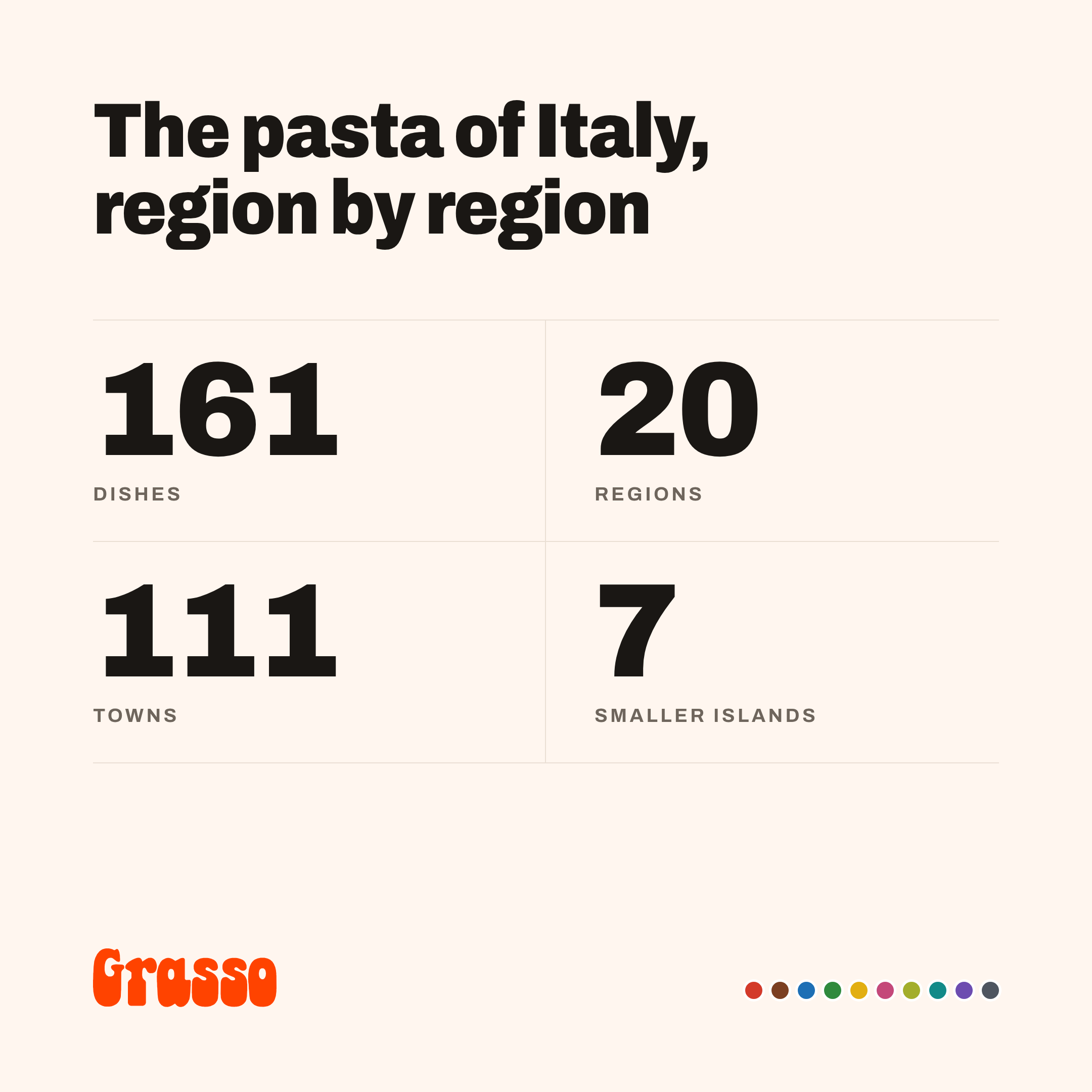
Our map looks at 161 different dishes, from 20 regions and seven smaller islands, pinning them to their local area.
At a glance
Here’s a rundown of what we discovered when making the map of Italian pasta dishes:
In total, we found 161 different dishes from 20 regions, 111 mapped locations, and seven smaller islands
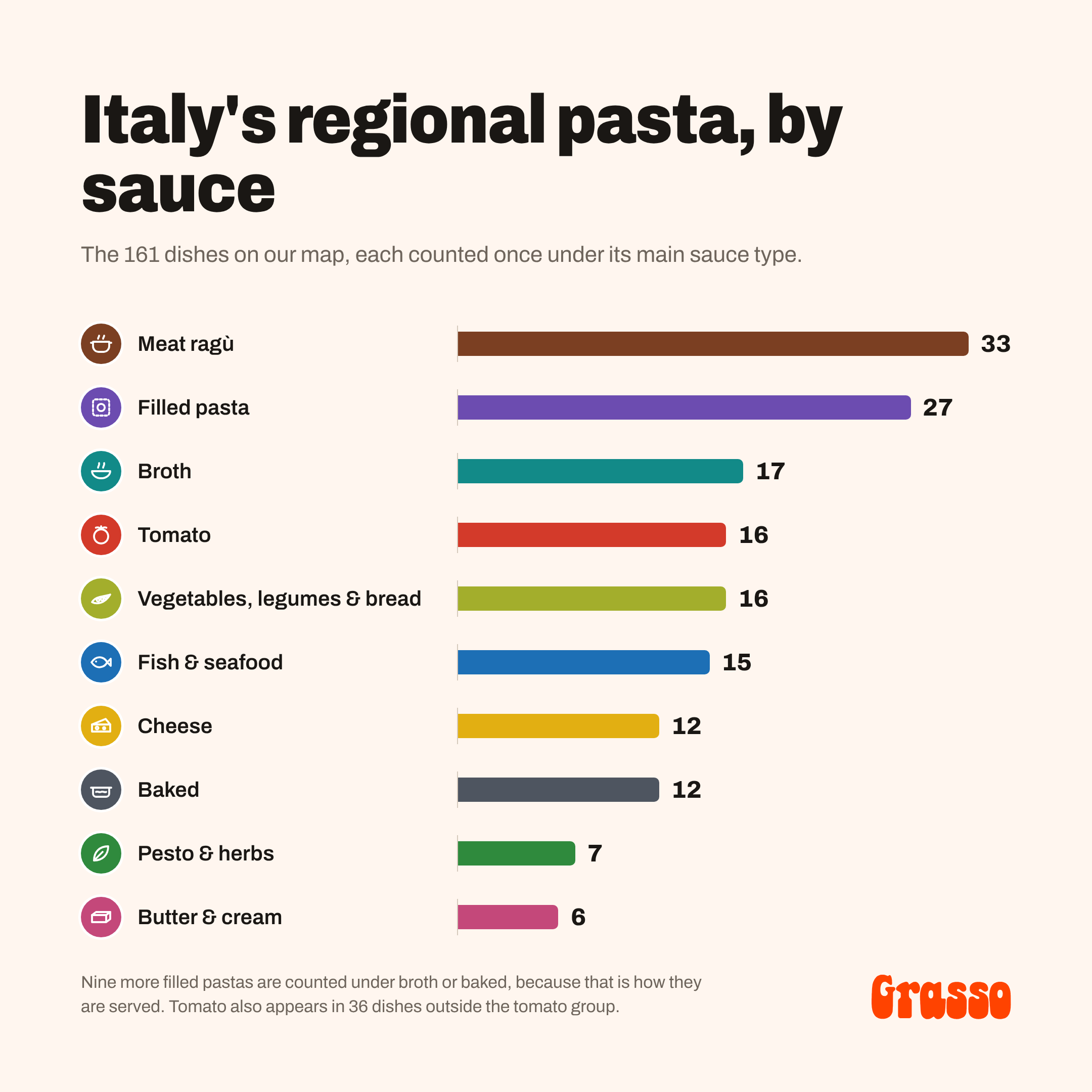
Meat ragù is the most common sauce, dressing 33 of the 161 dishes. These range from Bologna’s tagliatelle al ragù to the lorighittas of Morgongiori, cooked with chicken
Tomatoes are found in almost a third (52) of the dishes, and pork in its various forms in 51 dishes
Emilia-Romagna and Campania feature 16 dishes each, followed by Sicily with 14
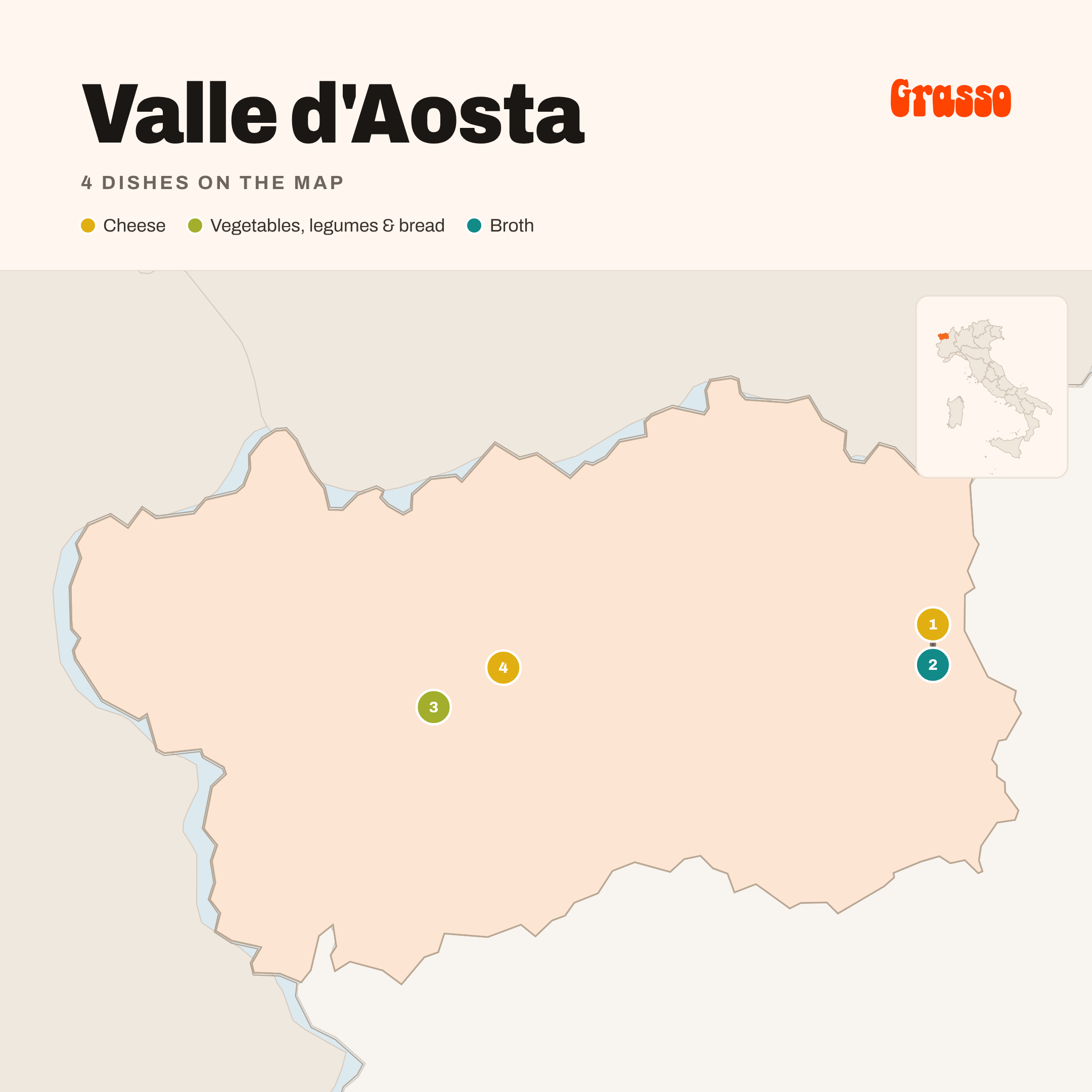
Valle d’Aosta has four dishes, cooking with polenta, soups, and fondue
How we made the map
We used Italian sources to find the sauces and the pasta, looking at the information on regional tourism boards, including Visit Sicily, Sardegna Turismo, Umbria Tourism, Turismo Roma, Visit Tuscany, and Emilia-Romagna Turismo. Alongside those, we used Italia.it, Regione Lazio’s list of traditional food products, the Aosta chamber of commerce’s book of traditional recipes, the Accademia Italiana della Cucina, Gambero Rosso and Treccani. Italian Wikipedia was as a starting point, but never the source.
A dish only made it onto the map when two independent sources confirmed it, and every fact in a description comes from one of those sources. Each dish card contains links to them (180 pages from 41 publishers in total). Some origins are disputed, such as carbonara, amatriciana, tortellini, and puttanesca. For those, we set out the competing claims instead of picking a side.
Each pin sits at the dish’s town of origin. Where there’s no single town, we put the pin in the area’s main town or regional capital.
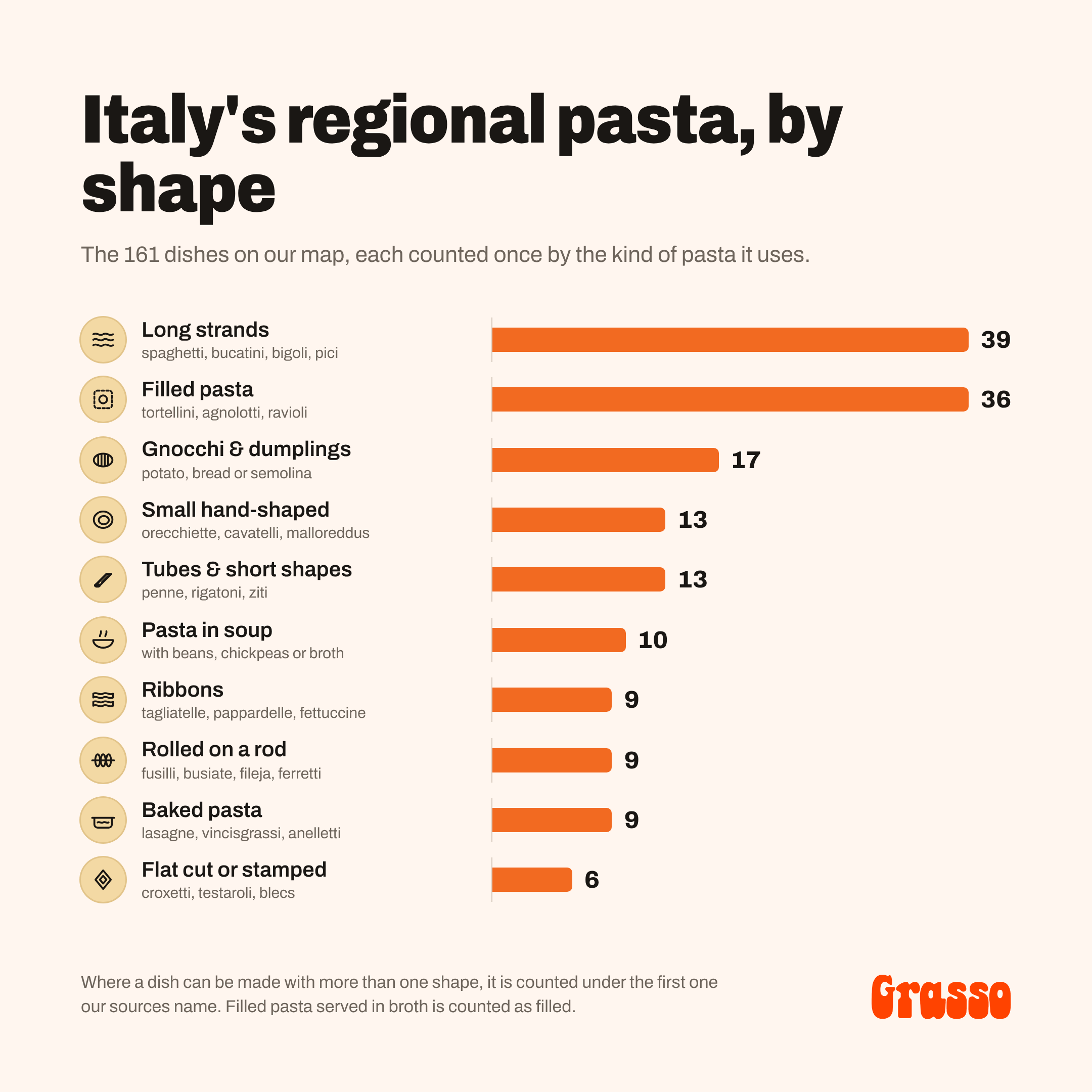
Gnocchi and dumplings, canederli and ndunderi also made it on the list, often served as primi piatti (first courses).
Which region tops the table?
Emilia-Romagna and Campania, with 16 dishes each, followed by Sicily with 14. Valle d’Aosta has the fewest with four, because its kitchen leans more towards polenta and soup.
| Region | Dishes on the map | Includes |
|---|---|---|
| Emilia-Romagna | 16 | Tortellini in brodo, tagliatelle al ragù, passatelli |
| Campania | 16 | Ziti al ragù napoletano, pasta alla genovese, ravioli capresi |
| Sicily | 14 | Pasta alla Norma, pasta con le sarde, busiate al pesto trapanese |
| Lazio | 10 | Carbonara, amatriciana, cacio e pepe |
| Liguria | 8 | Trofie al pesto, pansoti con salsa di noci, croxetti |
| Abruzzo | 8 | Spaghetti alla chitarra con le pallottine, pasta alla mugnaia, virtù teramane |
| Sardinia | 8 | Malloreddus alla campidanese, culurgiones, su filindeu |
| Veneto | 7 | Bigoli in salsa, casunziei, tortellini di Valeggio |
| Tuscany | 7 | Pici all'aglione, pappardelle sulla lepre, testaroli |
| Marche | 7 | Vincisgrassi, maccheroncini di Campofilone, cannelloni alla Rossini |
| Puglia | 7 | Orecchiette con le cime di rapa, ciceri e tria, spaghetti all'assassina |
| Calabria | 7 | Fileja, struncatura, pasta chjina |
| Piedmont | 6 | Agnolotti del plin, tajarin, ravioles |
| Lombardy | 6 | Pizzoccheri, casoncelli, tortelli di zucca |
| Trentino-Alto Adige | 6 | Canederli, Schlutzkrapfen, Schnalser Nudeln |
| Friuli-Venezia Giulia | 6 | Cjarsons, blecs, gnocchi di susine |
| Umbria | 6 | Strangozzi alla spoletina, pasta alla norcina, ciriole |
| Molise | 6 | Cavatelli al ragù di maiale, fusilli alla molisana, raviolo scapolese |
| Basilicata | 6 | Lagane e ceci, pasta con i peperoni cruschi, ragù alla potentina |
| Valle d'Aosta | 4 | Favò, chnéfflene, gnocchi alla bava |
Pasta from Valle d’Aosta
Pasta here doesn’t play the main character. Instead, the valley’s cooking runs on polenta, soups and fondue. Of the four, two dishes come from the Walser villages of the upper Lys valley.
1. Chnéfflene con fonduta (Gressoney-Saint-Jean). Small drops of batter, cooked in boiling water, and dressed with fontina fondue, cream and speck. Some cooks use slowly braised onions.
2. Chnolle in brodo (Gressoney-Saint-Jean). From the same kitchen, little gnocchi of maize and wheat flour, cooked and served in pork broth. They often turn up as a side dish with various cured meats.
3. Favò di Ozein (Aymavilles). Known as the reapers’ dish, this was made for the women who helped with the harvest each July. Short pasta is cooked with fresh broad beans, and layered with black rye bread toasted in butter and fontina.
4. Gnocchi alla bava (Aosta). Potato or buckwheat gnocchi tossed in melted fontina. ‘Bava’ refers to the stringy strands the cheese pulls into.
Pasta from Piedmont
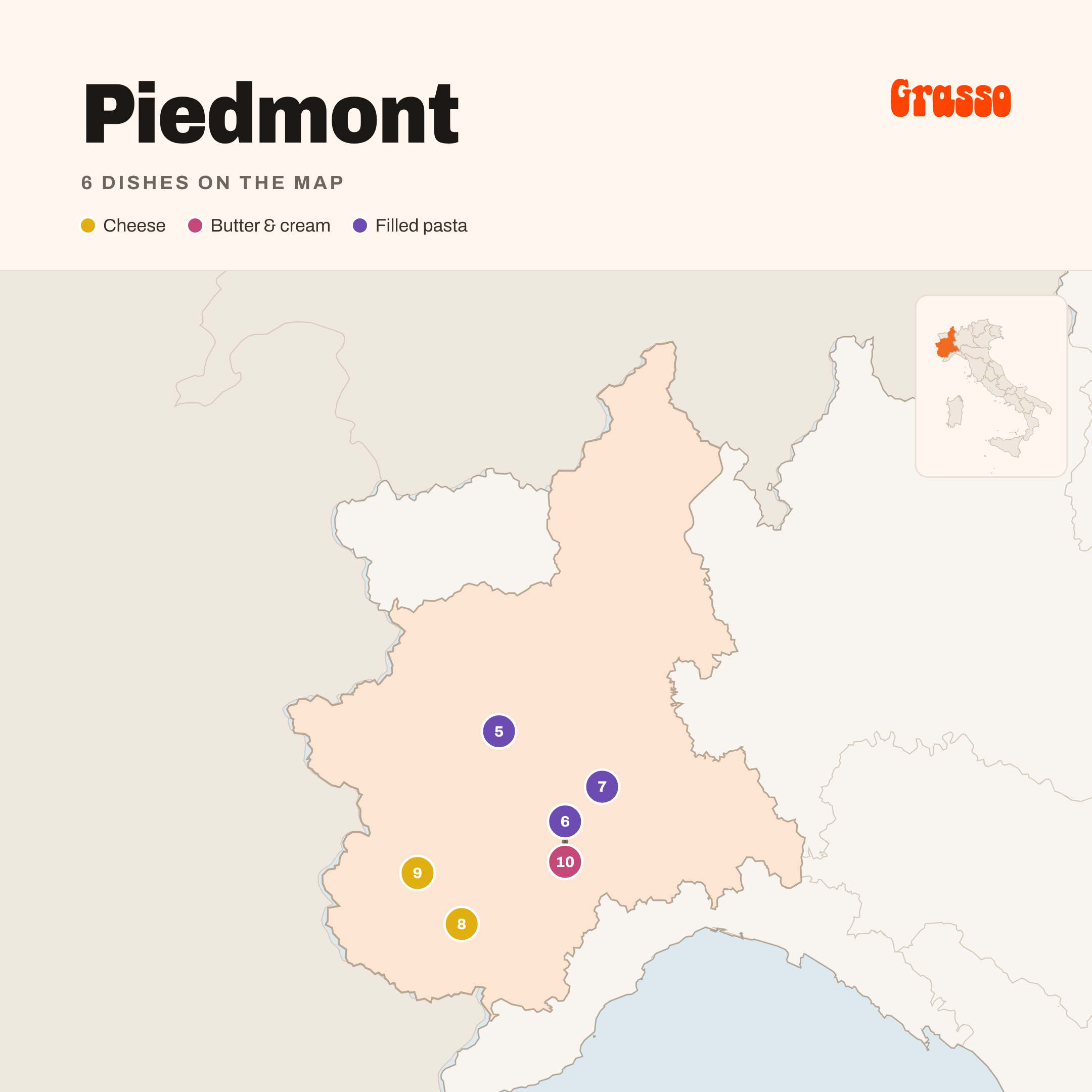
Piedmont makes its pasta with eggs, and lots of them. The tajarin of the Langhe take 20-30 egg yolks per kilo of flour, and the agnolotti in the region are filled with meat and closed by hand.
5. Agnolotti al sugo d’arrosto (Turin). Square agnolotti are filled with lean roast veal, egg, Parmigiano-Reggiano, and nutmeg, and sometimes with also with cabbage or spinach. The filling changes around the region with borage near Novara, Barbera in Alessandria, and donkey meat in Monferrato.
6. Agnolotti del plin (Alba). ‘Plin’ means pinch, and that’s how they’re sealed around roast veal and pork. Sometimes served with butter and sage, roast juices, or with no sauce.
7. Agnolotti gobbi astigiani (Asti). Made by hand and filled with pork and veal, with the ‘gobbo’ (hunchback) version protected by a municipal De.Co. designation.
8. Gnocchi al Castelmagno (Cuneo). Potato gnocchi with Castelmagno cheese from the Cuneo mountains.
9. Ravioli della Valle Varaita (Melle). Despite the name, these are small cylinders of potato, flour and local cheese, dressed with melted butter. Found in the Occitan valleys of Cuneo.
10. Tajarin al tartufo (Alba). These fine egg noodles are served with white Alba truffle, butter and cheese, or a meat sauce.
Pasta from Lombardy
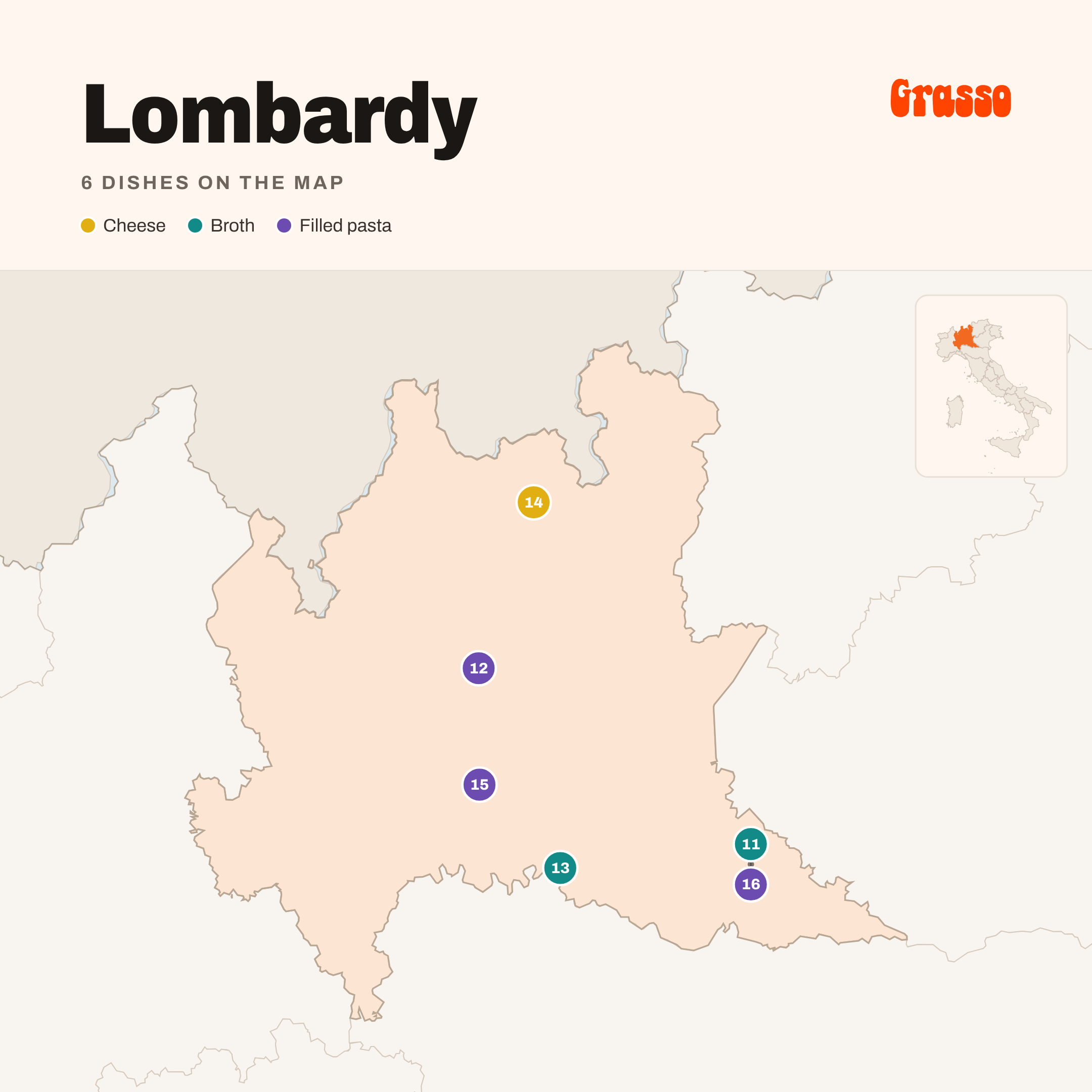
Pasta in this region can have a sweet streak, with Amaretti, raisins, candied citron, and mostarda.
11. Agnolini in brodo (Mantua). Filled pasta that Gambero Rosso links to the Gonzaga court, served with broth. Fillings often include beef stracotto with salamella and pancetta, or capon with bread and cheese.
12. Casoncelli alla bergamasca (Bergamo). Half moons filled with meat, raisins, amaretti, grana and nutmeg, dressed with melted butter, sage, and pancetta.
13. Marubini in brodo (Cremona). Round parcels of braised beef, Cremona salami, Grana Padano and nutmeg, served in a broth of beef, capon or hen, and pork.
14. Pizzoccheri della Valtellina (Sondrio). Short, thick buckwheat ribbons cooked with potatoes and savoy cabbage, layered with melted butter and Valtellina Casera or Bitto.
15. Tortelli cremaschi (Crema). Made for festive days with a filling of amaretti, raisins, and candied citron, mint and mostaccino biscuit, sage and melted butter.
16. Tortelli di zucca mantovani (Mantua). Pumpkin, amaretti, mostarda and Parmigiano-Reggiano make a sweet and savoury filling.
Pasta from Trentino-Alto Adige
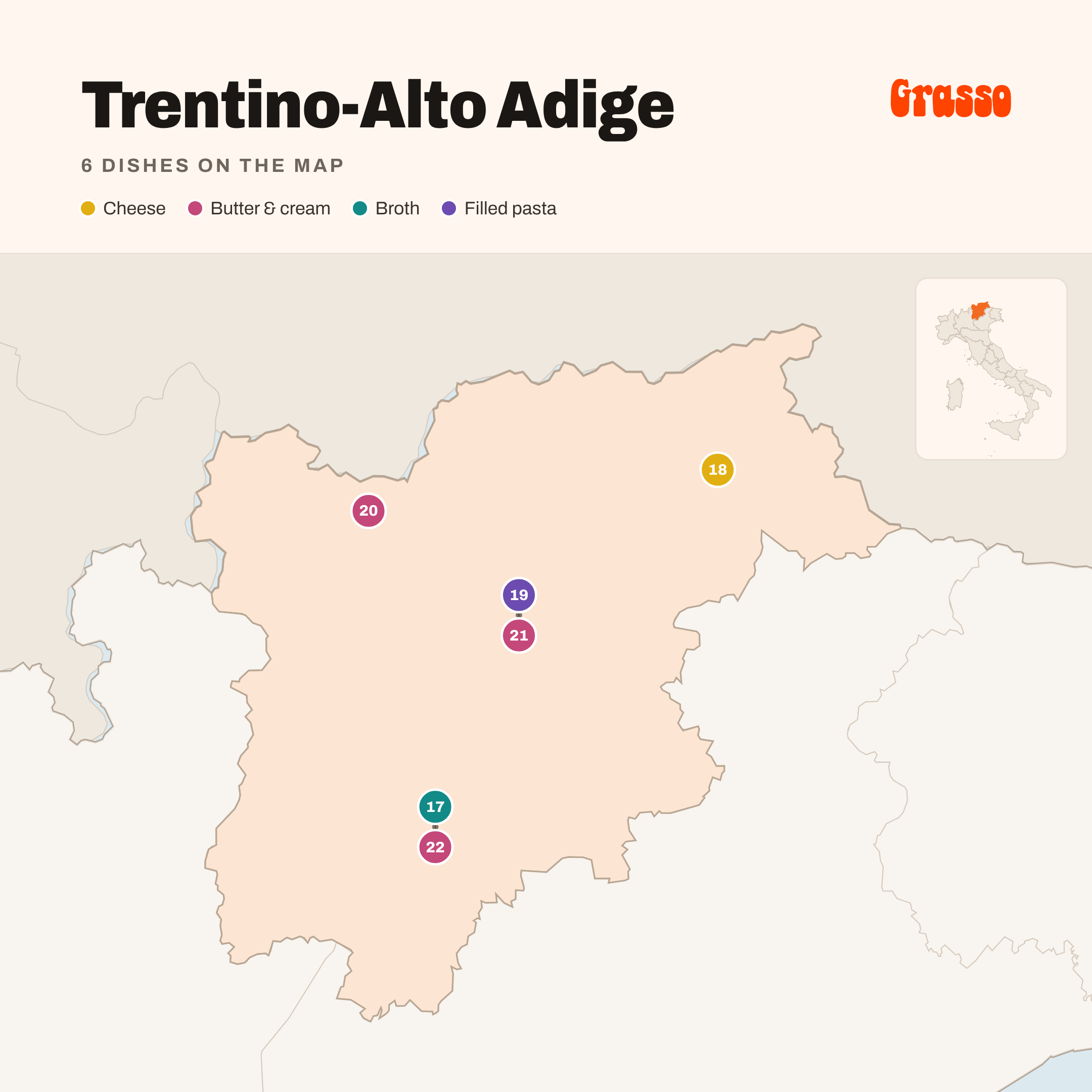
Traditional pasta wasn’t as common here before the Second World War, and dumplings were often served as the first course.
17. Canederli in brodo (Trento). Stale bread, egg, speck and cheese rolled into dumplings, and served with broth on cold days. Some add herbs, mushrooms and cured meats.
18. Kaspressknödel (Brunico). Dumplings of stale bread and Graukäse, South Tyrol's pungent cheese and fried in butter. Served with broth, or dry with a raw cabbage salad.
19. Schlutzkrapfen (Bolzano). Ravioli made with rye and wheat dough, with fillings that often follow the season. Spinach, ricotta and potato in winter, poppy seed and chives in spring. Melted butter, Parmesan and chives finish them.
20. Schnalser Nudeln (Val Senales). Rye flour and fresh curd cheese are pressed into thin noodles, and are fried in plenty of butter rather than boiled.
21. Spinatspätzle (Bolzano). A soft spinach dough pushed through a spätzle maker into boiling water, then dressed with butter, cheese and speck.
22. Strangolapreti trentini (Trento). Gnocchi of stale bread and spinach, or nettles, bound with egg and Trentino grana and served with melted butter and sage.
Pasta from Veneto
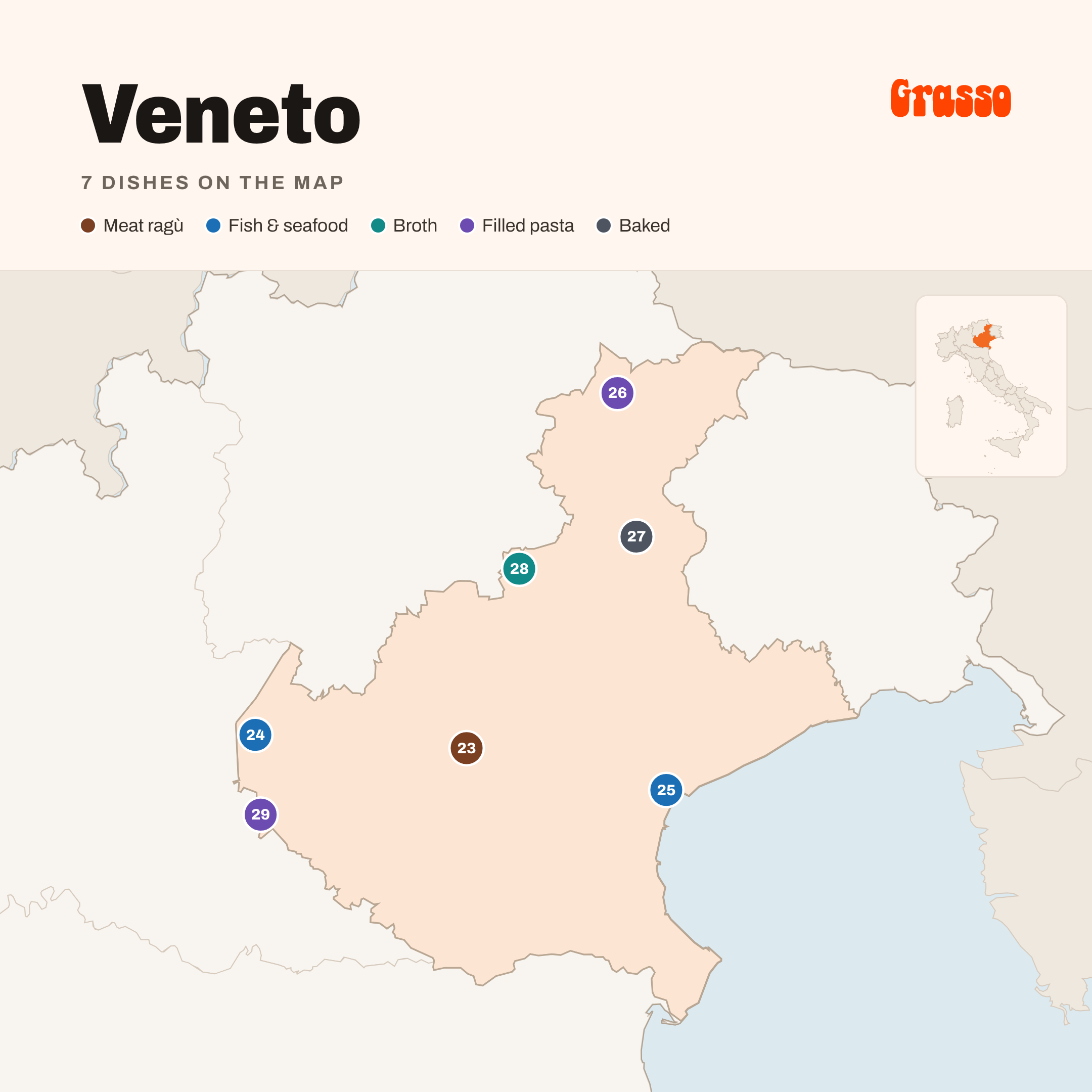
The home of bigoli, pasta that is pressed by a bigolaro into thick, rough strands.
23. Bigoli con l’anatra (Venice). Served with duck, and traditionally cooked in duck’s broth and dressed with a sauce of its offal. A duck ragù is more common today.
24. Bigoli con le sardelle (Garda). Served with Lake Garda’s locally named ‘sardelle’ cooked in oil.
25. Bigoli in salsa (Venice). A sauce made with salted sardines or anchovies melted into white onion with olive oil and white wine.
26. Casunziei all’ampezzana (Cortina d’Ampezzo). Ravioli filled with beetroot, topped with melted butter, ricotta and poppy seeds.
27. Lasagna da fornèl (Belluno). Sweet lasagna from the Dolomites, layered with raisins, walnuts, sugar and sliced apple.
28. Pasta e fagioli (Lamon). Pasta and bean soup with pork rind or prosciutto bones and eaten warm or cold.
29. Tortellini di Valeggio sul Mincio (nodo d’amore) (Valeggio sul Mincio). Fine tortellini with beef, pork, or chicken, served in broth, or with butter, sage and grana.
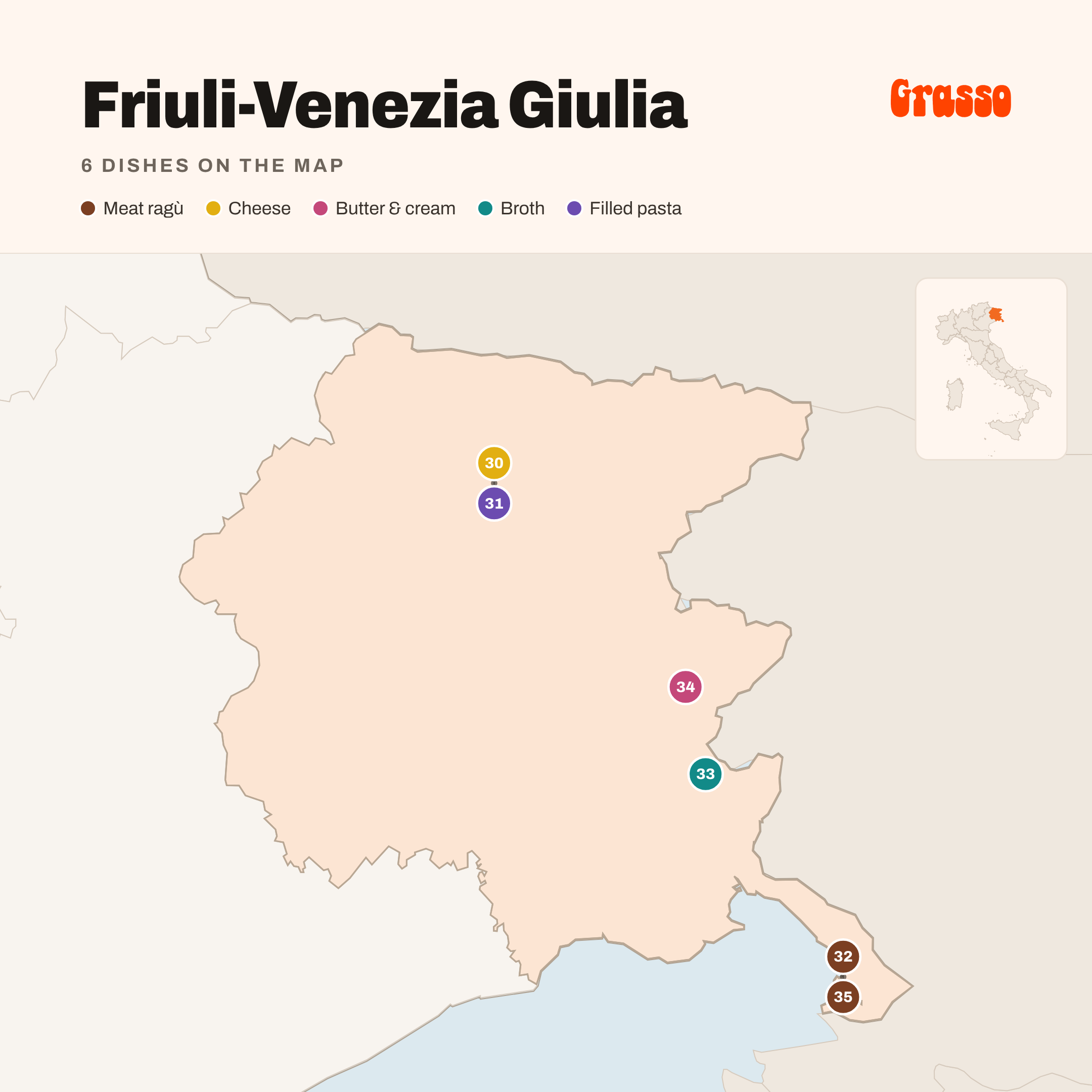
Pasta from Friuli-Venezia Giulia
Bordering Austria and Slovenia, pasta from here feels the influence.
30. Blecs (Tolmezzo). Buckwheat pasta triangles with butter or cheese such as Montasio. Gorizia serves them with duck, the Collio with capon.
31. Cjarsons (Tolmezzo). Meatless ravioli filled with herbs, raisins, potatoes, cinnamon or crumbled amaretti, dressed in melted butter and smoked ricotta.
32. Fusi istriani al sugo di gallina (Trieste). Egg pasta rolled around a thin stick and served with ragù of hen or rooster.
33. Gnocchetti de gries in brodo (Cormòns). Small dumplings served in a broth or dry with melted butter.
34. Gnocchi di susine (Cividale del Friuli). Inside each potato dumpling is a plum, served with melted butter and fried breadcrumbs, or as a dessert with sugar and cinnamon.
35. Gnocchi de pan (Trieste). Stale bread, mixed with milk, egg, parsley and speck or ham, served with goulash or juices from the roast.
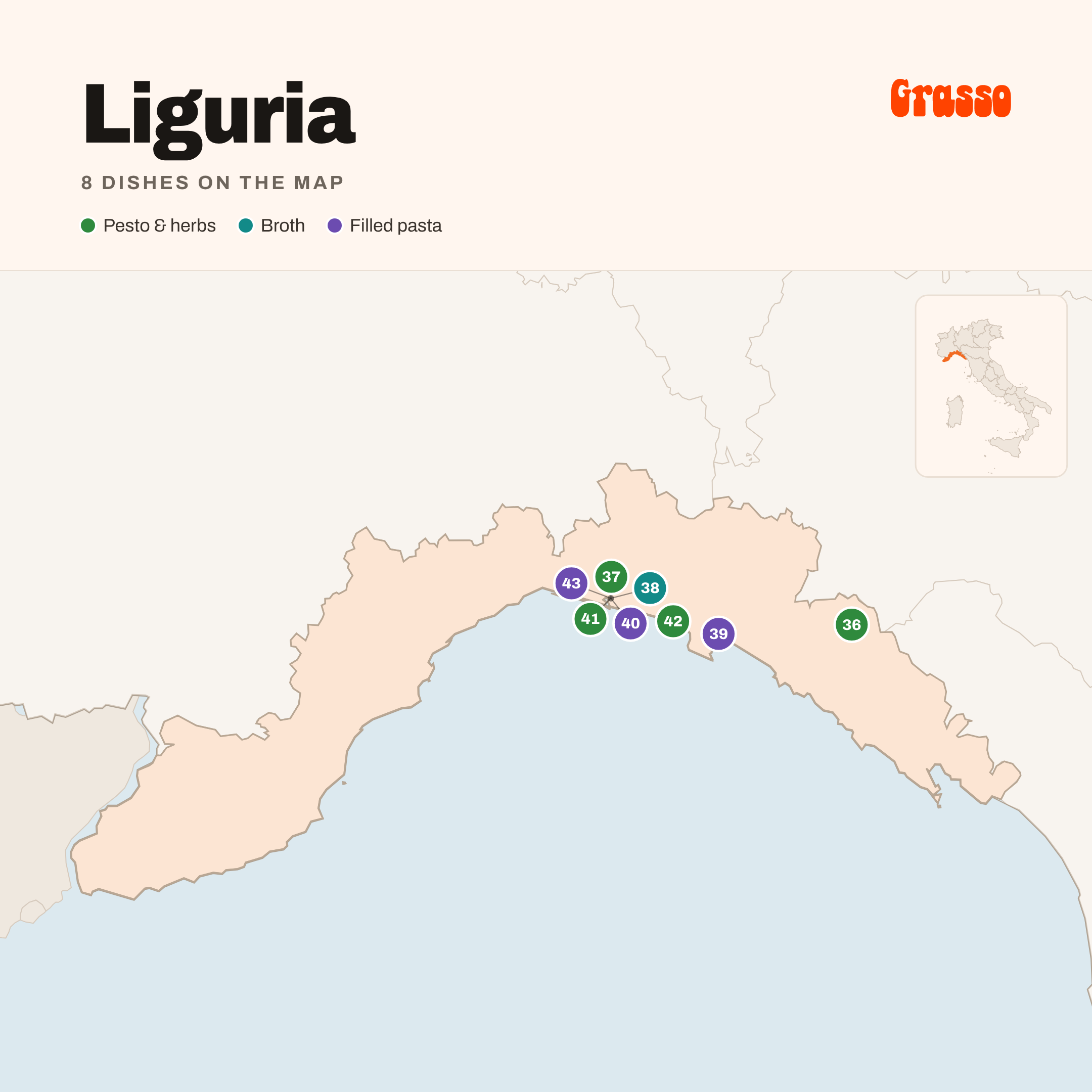
Pasta from Liguria
Herbs and nuts feature in many of these pastas, and include trofie and mandilli.
36. Croxetti con pinoli e maggiorana (Varese Ligure). Pasta pressed and dressed with pine nuts and marjoram leaves.
37. Mandili de saea al pesto (Genoa). Silk handkerchiefs dressed with pesto.
38. Natalini in brodo (Genoa). Served on Christmas Day, these long tubes are served in capon broth with crumbled sausage.
39. Pansoti con salsa di noci (Rapallo). Ravioli with wild herbs (known as preboggion) and fresh cheese in a sauce with walnuts, pine nuts, garlic and milk-soaked bread.
40. Ravioli al tocco (Genoa). Ravioli filled with borage, meat and cheese with a slow-cooked beef sauce.
41. Trenette al pesto (Sori). Dressed with pesto, usually cooked with potatoes and green beans.
42. Trofie al pesto (Sori). Dressed with Genoese pesto, with a trofie festival held in Sori since 1985.
43. Zembi d’arzillo (Genoa). Ravioli stuffed with white fish and dressed with a seafood or tomato sauce.
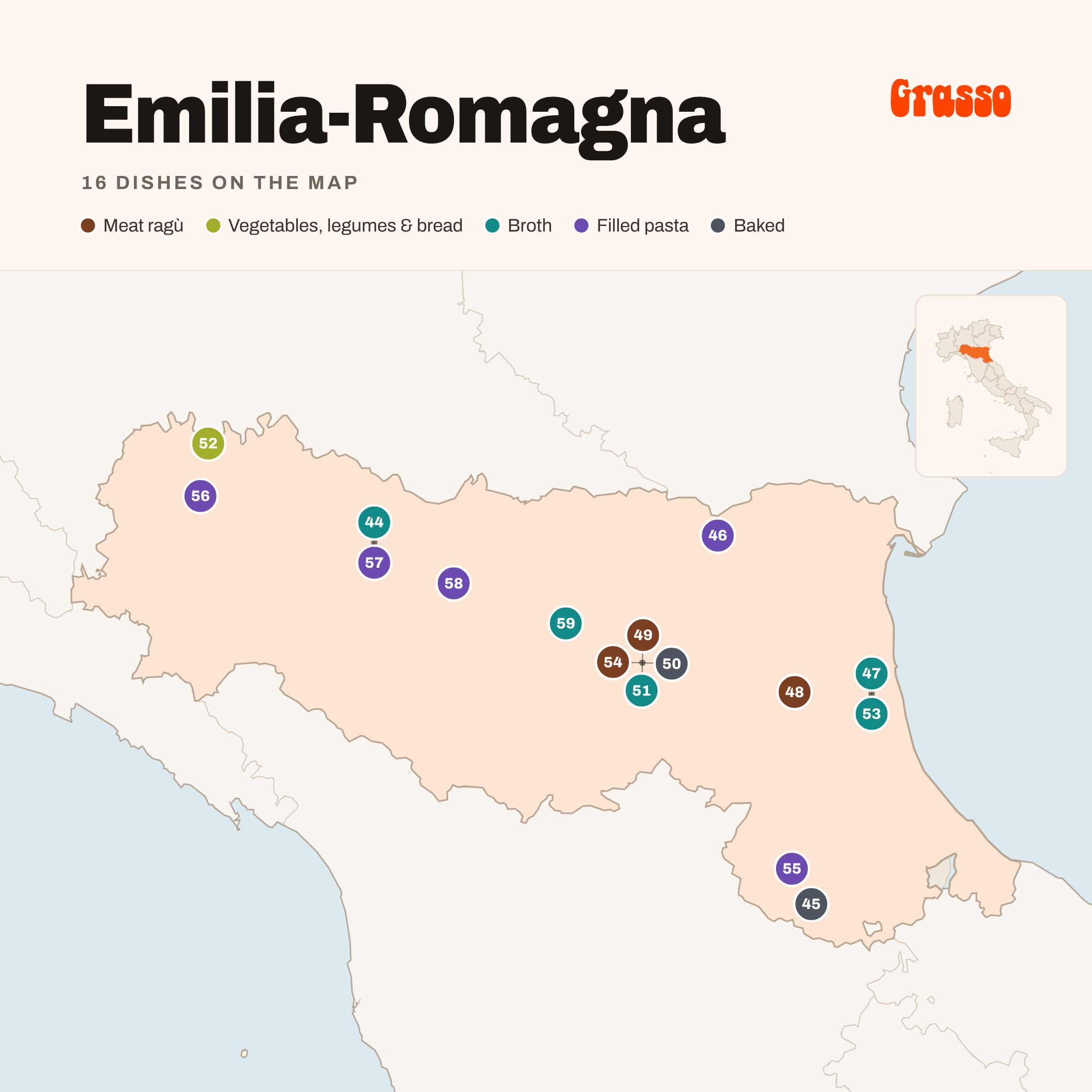
Pasta from Emilia-Romagna
Sixteen dishes on the map come from this region, nine filled and five served in broth.
44. Anolini in brodo (Parma). Beef stracotto, Parmigiano-Reggiano, and breadcrumb filled pasta, cooked in capon broth.
45. Basotti (Bagno di Romagna). Fine egg noodles cooked in pork-bone broth, and baked with lard, pecorino and breadcrumbs until crisp.
46. Cappellacci di zucca ferraresi (Ferrara). Violina squash, Parmigiano-Reggiano, breadcrumbs and nutmeg dating back to the 16th century, dressed with butter and sage or meat ragù.
47. Cappelletti romagnoli in brodo (Ravenna). A Christmas dish cooked in capon broth and filled with cheese.
48. Garganelli al ragù (Lugo). Egg pasta rolled into quills, with a meat ragù, or sausage, peas and prosciutto.
49. Gramigna alla salsiccia (Bologna). Egg pasta with sausage, and either white with butter or red with tomato.
50. Lasagne verdi alla bolognese (Bologna). Green spinach lasagna, ragù, béchamel and Parmigiano Reggiano, layered and baked.
51. Passatelli in brodo (Bologna). Breadcrumbs, egg, Parmigiano-Reggiano, nutmeg and lemon zest pressed into a broth.
52. Pisarei e fasò (Piacenza). Gnocchetti with flour and stale bread, and a sauce of beans, lard, onions and tomato.
53. Spoja lorda in brodo (Ravenna). Squares of egg pasta with a thin cheese filling using ricotta and raviggiolo, egg, Parmigiano-Reggiano and salt, served in capon or chicken broth.
54. Tagliatelle al ragù (Bologna). The classic egg tagliatelle with a slow-cooked beef and pork ragù.
55. Tortelli alla lastra (Santa Sofia). Cooked on a hot stone slab, these large tortelli are filled with potato, pumpkin, cheese, pancetta or lard.
56. Tortelli con la coda (Vigolzone). Ricotta and spinach tortelli served with butter, sage and Parmesan.
57. Tortelli d’erbetta (Parma). Served on St John’s Eve, tortelli filled with ricotta and chard or spinach, and topped with Parmigiano and butter.
58. Tortelli verdi reggiani (Reggio Emilia). Spinach and ricotta tortelli, and dressed with aged Parmigiano and butter.
59. Tortellini in brodo (Castelfranco Emilia). Rings of egg pasta filled with pork loin, prosciutto, mortadella and Parmigiano Reggiano and served in a broth with hen and beef or capon.
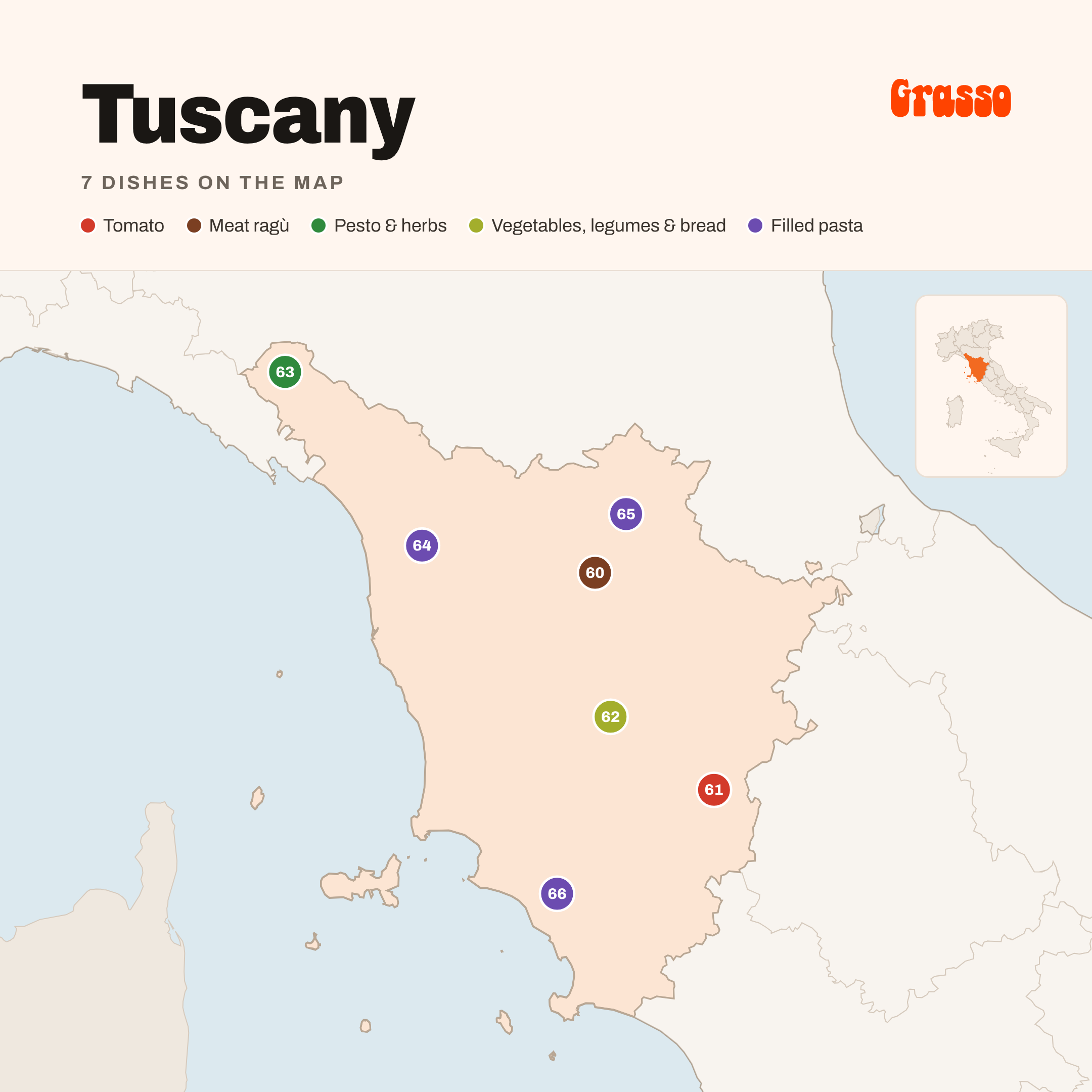
Pasta from Tuscany
Much of Tuscan pasta is rolled by hand from flour and water, while filled pasta pops up in both the north, and the south.
60. Pappardelle sulla lepre (Florence). 2cm-wide ribbons with a slow-cooked hare sauce.
61. Pici all’aglione (Montepulciano). Thick, rough strands served with fresh tomato sauce with garlic and olive oil.
62. Pici alle briciole (Siena). Stale bread crumbled and toasted in oil with garlic or chilli.
63. Testaroli al pesto (Pontremoli). Batter cooked in a testo, with the resulting sheet cut and cooked in boiling water, and served with pesto, or olive oil and cheese.
64. Tortelli lucchesi (Lucca). Filled with minced meat, mortadella, cheese and herbs, with a meat sauce.
65. Tortelli di patate mugellani (Borgo San Lorenzo). Potato, garlic, parsley and Parmigiano filled pasta served with meat ragù or duck sauce.
66. Tortelli maremmani (Grosseto). Filled with ricotta, spinach and nutmeg, served with butter and sage or a wild boar ragù.
Pasta from Umbria
Most Umbrian pasta doesn’t contain egg, and often uses thick strands of pasta cut or rolled by hand.
67. Ciriole alla ternana (Terni). Eggless pasta tossed in garlic, olive oil, chilli, parsley and tomato.
68. Gnocchi al ragù d’agnello (Perugia). Served with lamb, rosemary, tomato, and white wine ragù with pecorino.
69. Maccheroni dolci con le noci (Perugia). A sweet pasta served at Christmas with walnuts, breadcrumbs, sugar, cocoa, cinnamon and Alchermes liqeur.
70. Pasta alla norcina (Norcia). Crumbled sausage, ricotta, and sometimes black truffle.
71. Strangozzi alla spoletina (Spoleto). Long, narrow, hand-rolled strands of pasta with tomato, garlic, chilli and parsley.
72. Umbricelli al sugo (Perugia). Thick cords of pasta served with tomato sauce or sometimes a meat ragù.
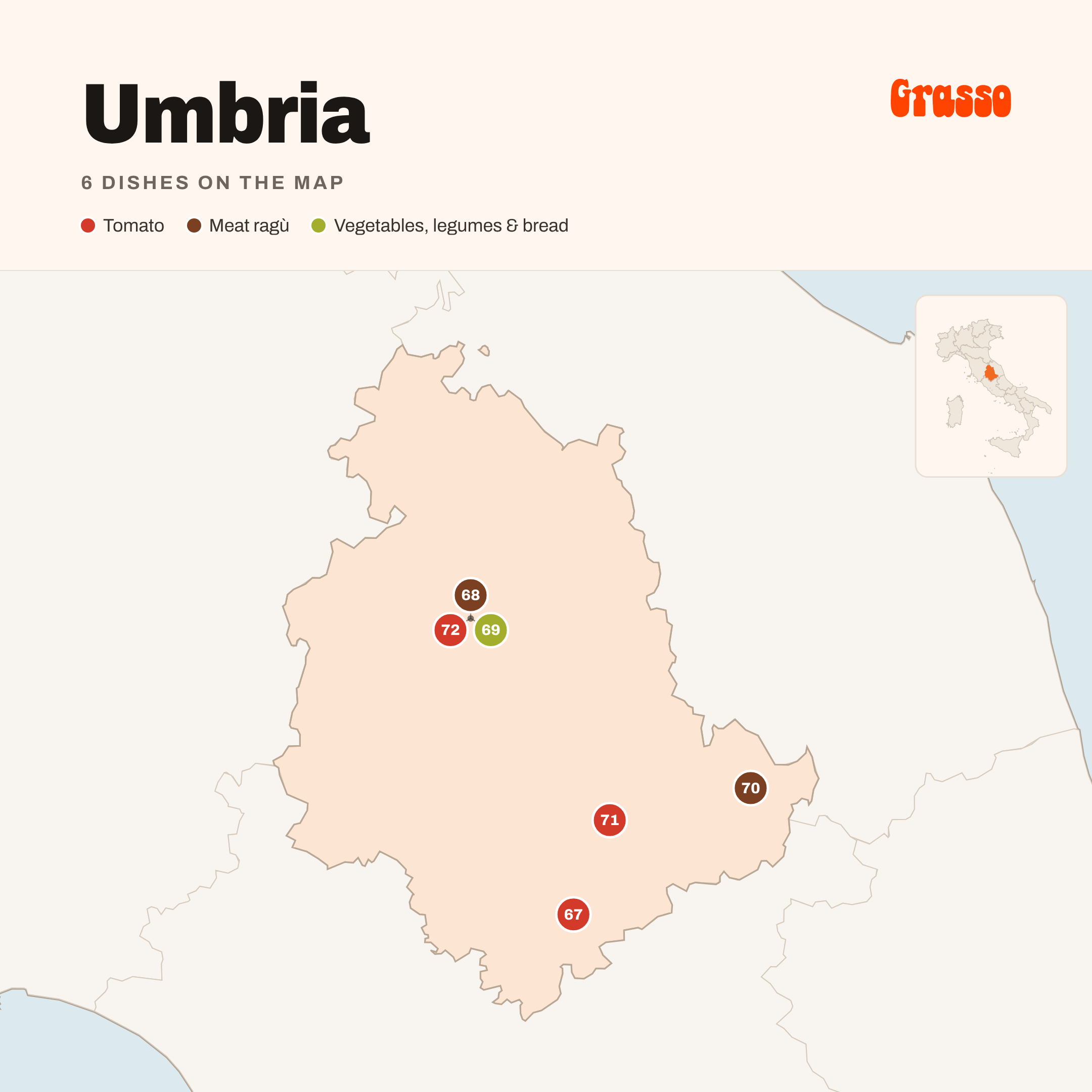
Pasta from Marche
Vincisgrassi is the dish in Marche for Sundays and feast days, and is a rich baked pasta.
73. Calcioni di Treia al sugo (Treia). Filled pasta with sheep’s ricotta, cheese, lemon zest and marjoram dressed with tomato sauce.
74. Cannelloni alla Rossini (Pesaro). These cannelloni are filled with chicken, veal and Parmesan, sharing the name of the composer Gioachino Rossini.
75. Cappelletti in brodo alla pesarese (Pesaro). Small cappelletti with pork, cooked in capon broth.
76. Maccheroncini di Campofilone al ragù (Campofilone). Dried egg strands with flour, served with a Marche ragù.
77. Tacconi al pomodoro e ricotta (Urbino). Tomato and ricotta dress rough squares and diamonds of pasta using flour, maize and sometimes fava bean flour.
78. Torcelli in brodo (Ancona). Thin egg spaghetti from Ancona’s Jewish community, cooked in broth or dressed with celery and tomato.
79. Vincisgrassi (Macerata). Egg pasta layered with chicken giblets, meat ragù, béchamel and Parmigiano.
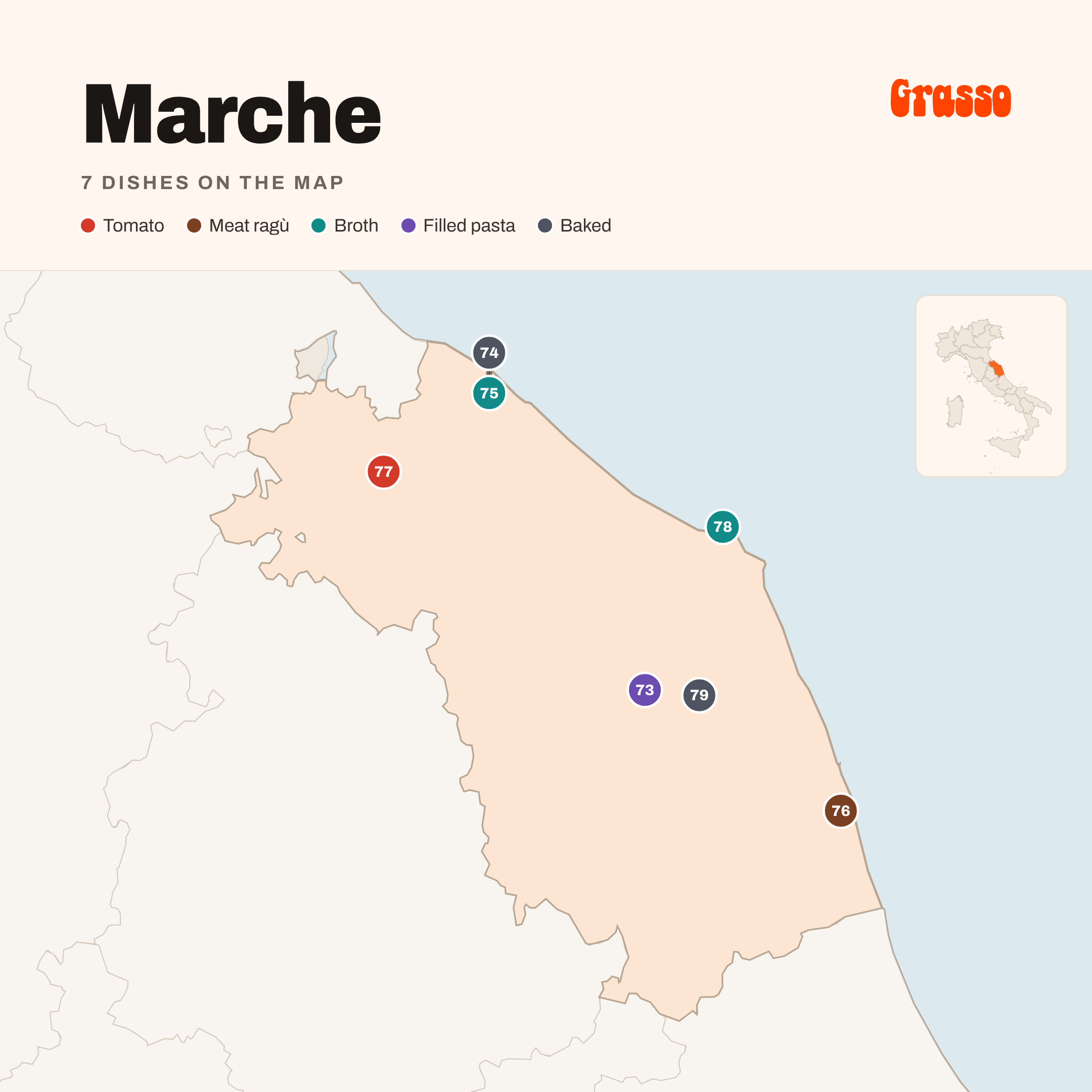
Pasta from Lazio
Pecorino is key to many of Lazio’s best-known pasta dishes, including cacio e pepe, gricia, carbonara and amatriciana.
80. Bucatini all’amatriciana (Amatrice). Guanciale and tomato with pecorino. The dish now has an EU-registered Traditional Speciality Guaranteed (STG) certification.
81. Cappelletti in brodo romani (Rome). A soup pasta made in Rome since the early 1900s, prepared at Christmas.
82. Fettuccine alla papalina (Rome). The story has it that this was created for Pope Pius XII, and is similar to carbonara, but swaps guanciale for cured ham and pecorino for Parmigiano, with butter, onion and cream.
83. Fregnacce alla reatina (Rieti). Lazio’s version of maltagliati, with small diamonds of fresh pasta with tomato and porcini.
84. Gnocchi alla romana (Rome). Semolina cooked in milk and baked with butter and Parmigiano.
85. Pasta alla gricia (Accumoli). Known as the ‘white’ amatriciana, with guanciale, pecorino and black pepper.
86. Penne all’arrabbiata (Rome). ‘Arrabbiata’ translates to angry, and this sauce is made with olive oil, garlic, tomato, and plenty of spicy chilli.
87. Rigatoni con la pajata (Rome). This uses the small intestines of a milk-fed calf, which were traditionally cooked with the curdled milk still inside, producing a rich and creamy sauce.
88. Spaghetti alla carbonara (Rome). One of the most famous pasta dishes, which usually causes a stir when people add cream. The traditional way of cooking this is with guanciale, egg yolk, Pecorino Romano, and black pepper.
89. Tonnarelli cacio e pepe (Rome). Pecorino Romano and black pepper, melted into a cream with pasta water. A cheap meal prepared for shepherds and farmers in the Roman countryside.
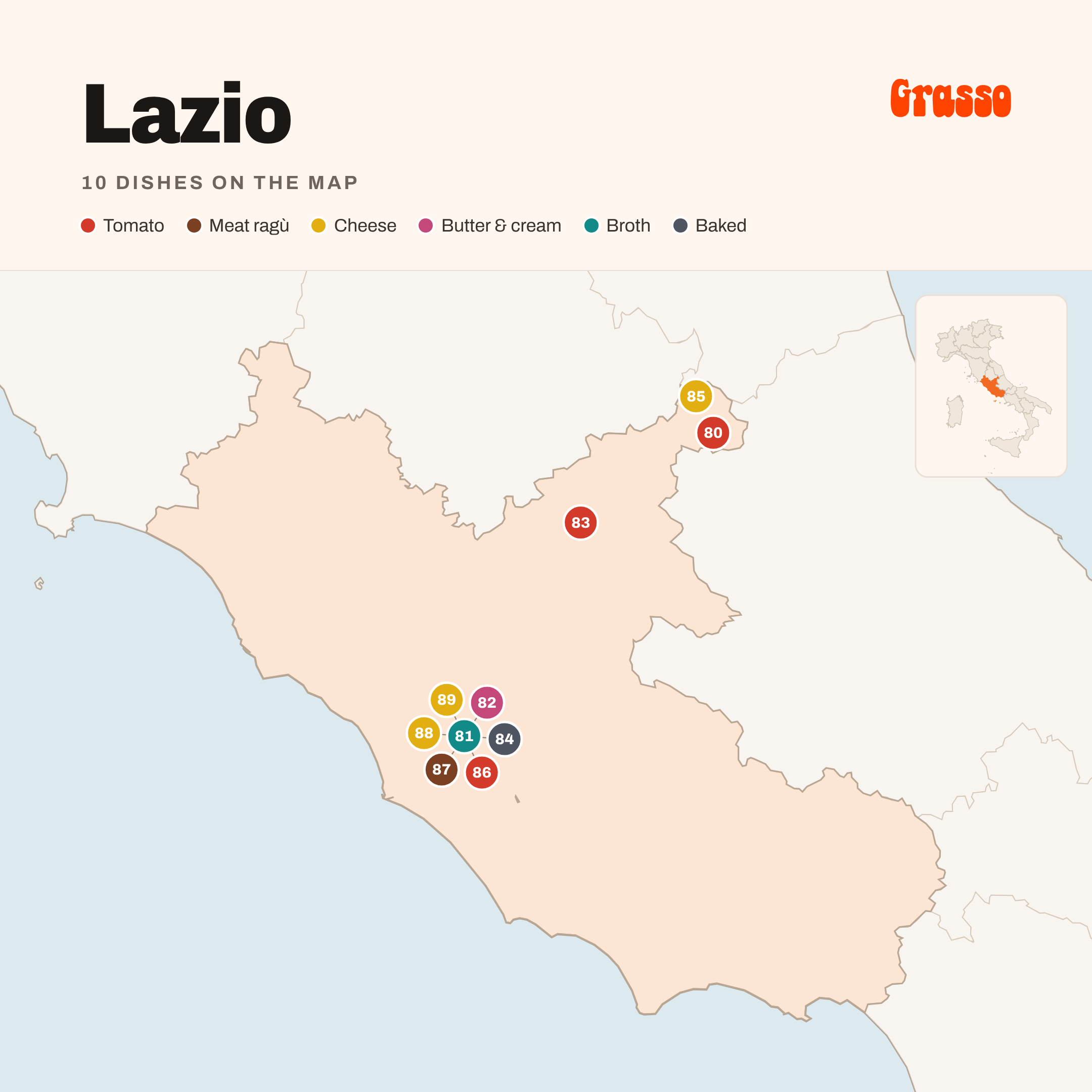
Pasta from Abruzzo
Abruzzo’s pasta is varied, with sauces made with lamb ragù, meatballs, vegetables, and crabs.
90. Ceppe al sugo (Civitella del Tronto). Eggless pasta wrapped around a stick to make a tube, served with meat sauce and pecorino.
91. Maccheroni alla chitarra al ragù d’agnello (L’Aquila). Chitarra pasta with a slow-cooked ragù using lamb, sheep, beef, pork, or a mix.
92. Pasta alla mugnaia (Elice). Long, thick, hand-pulled strands of pasta dressed with veal, pork, browned peppers, tomato and aubergine.
93. Rintrocilo al ragù di castrato (Lanciano). Long, square pasta served with a mutton and pork ragù, often eaten as the first course at Christmas.
94. Sagne e fagioli (Chieti). Strips of eggless pasta cooked with beans in a loose tomato sauce, served with sausage, liver, or pancetta in the province of Chieti.
95. Spaghetti alla chitarra con i pelosi (Vasto). Small crabs from Vasto and Ortona fried in oil and with tomatoes.
96. Spaghetti alla chitarra con le pallottine (Teramo). Small lamb or beef meatballs cooked in tomato sauce.
97. Virtù teramane (Teramo). A thick soup, often eaten on 1st May, with dried and fresh legumes, vegetables, pork, and several pasta shapes cooked separately before being combined.
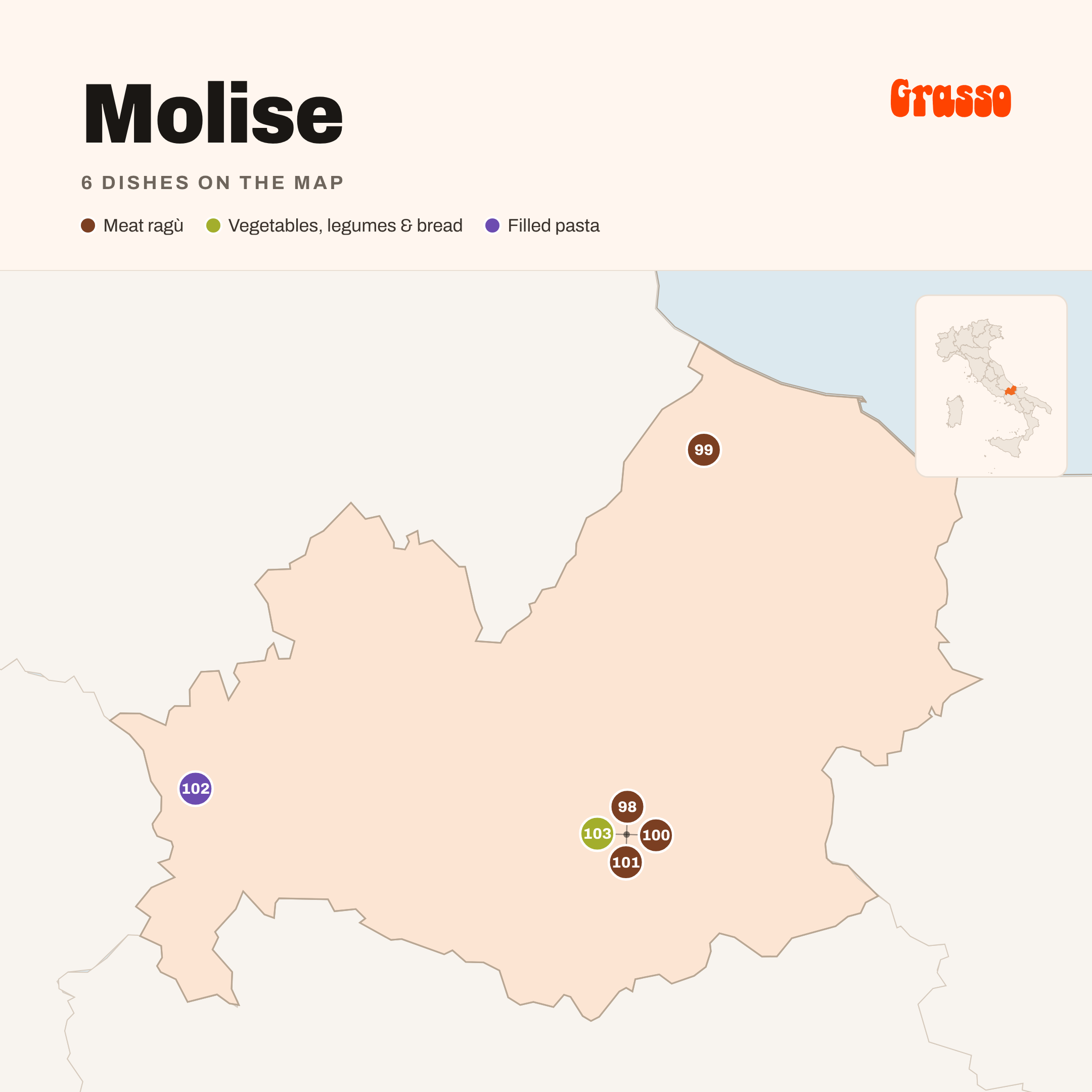
Pasta from Molise
Pork and lamb ragù make up some of the sauces in Molise, prepared with durum wheat pasta, including fusilli, crioli, and cavatelli.
98. Cavatelli al ragù di maiale (Campobasso). A well-known and traditional pasta of Molise. Small shells with a pork ragù, often served on the 17th January to celebrate the feast of Sant’Antonio.
99. Cavatelli con ventricina (Montenero di Bisaccia). Spiced cured pork served with a garlic, tomato and parsley sauce.
100. Crioli al ragù (Campobasso). The Molise version of the chitarra, with egg spaghetti served with pork, duck, or sheep ragù. At Christmas this is often served with walnuts and salt cod.
101. Fusilli alla molisana (Campobasso). Durum-wheat pasta shaped around a thin rod, traditionally served with lamb ragù and pecorino.
102. Raviolo scapolese (Scapoli). From the province of Isernia, egg ravioli filled with sausage, egg, potato, chard and Parmesan, topped with a tomato sauce.
103. Sagne e fagioli (locally known as lagane e fagioli)(Campobasso). Also shared with Abruzzo, these rectangles of pasta are cooked with beans, cicerchie, or chickpeas, and flavoured with lard, guanciale, or sausage.
Pasta from Campania
Half (eight) of the dishes in Campania originate in Naples, with others from the coastal towns and the islands.
104. Bucatini al sugo di coniglio all’ischitana (Ischia). A popular first course in Ischia, with rabbit stewed in a clay pot with white wine, cherry tomatoes, garlic and herbs. Bucatini is served with the juices first, and the rabbit as the main.
105. Frittata di maccheroni (Naples). Leftover pasta is bound with beaten egg and cheese and then fried or baked, sliced and eaten cold.
106. Gnocchi alla sorrentina (Sorrento). Potato gnocchi with tomato sauce and fiordilatte, baked and served in a terracotta pot.
107. Lagane e ceci (Avellino). Wide strips of fresh pasta in chickpea cream with tomato.
108. Lasagna napoletana di Carnevale (Naples). Frilled pasta sheets baked with Neapolitan ragù, small meatballs, mozzarella, ricotta, salami and hard-boiled eggs.
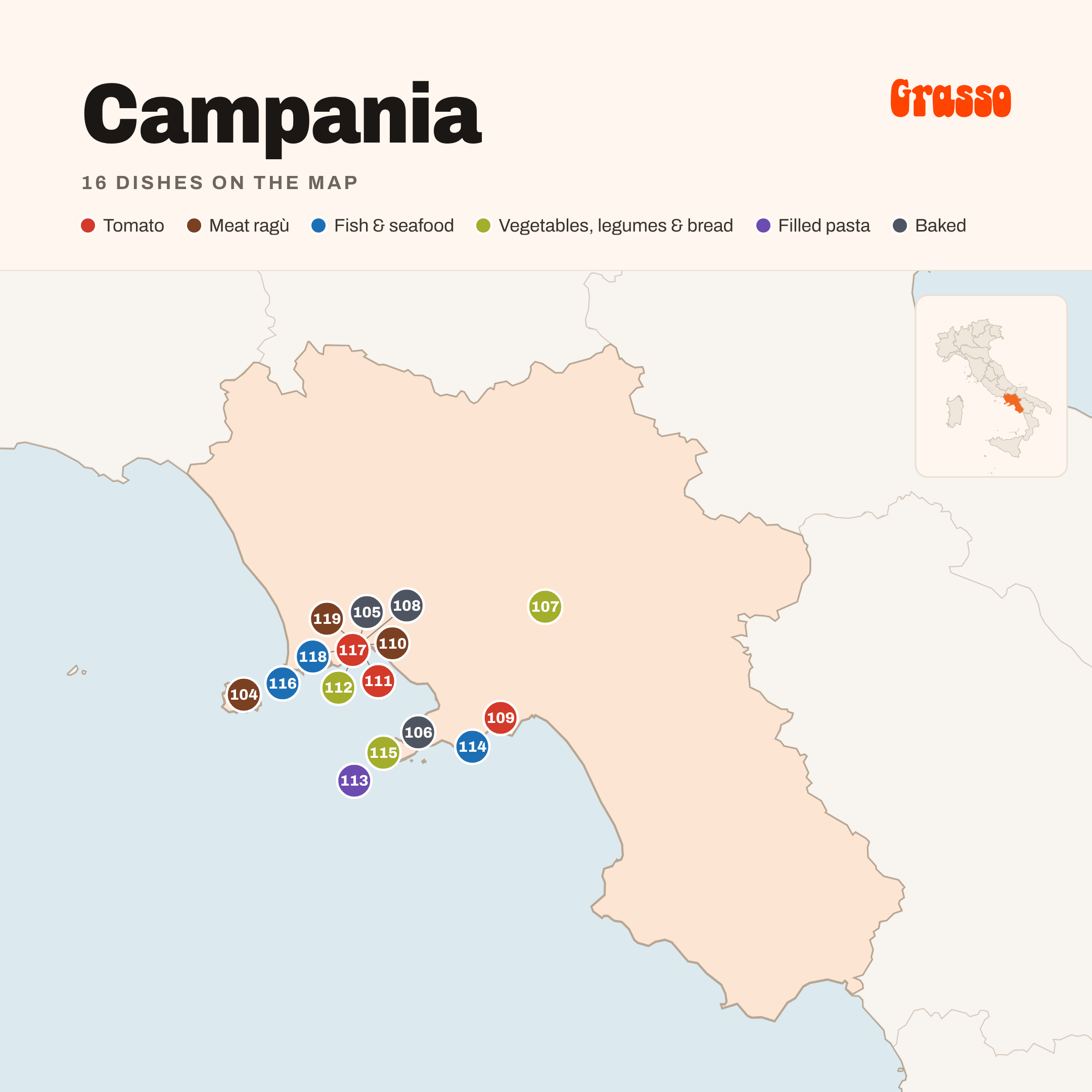
109. Ndunderi di Minori (Minori). Ricotta and flour dumplings served with a tomato or ragù sauce and served at celebrations of the patron saint, Trofimena.
110. Pasta alla genovese (Naples). A beef sauce slowly stewed with onions, and often served with ziti or candele.
111. Pasta allo scarpariello (Naples). The sauce combines tomato, basil and cheese. A quick sauce from the Quartieri Spagnoli.
112. Pasta e patate con la provola (Naples). Mixed pasta shapes cooked with potato, onion, and celery with smoked provola and Parmesan stirred in towards the end. A hearty and affordable meal.
113. Ravioli capresi (Capri). Capri’s most famous dish is ravioli filled with caciotta, Parmigiano and marjoram served with a fresh tomato and basil sauce.
114. Scialatielli ai frutti di mare (Amalfi). A recent recipe from 1978, created by Enrico Cosentino, using short, thick ribbons of pasta along with mussels, clams and squid.
115. Spaghetti alla Nerano (Massa Lubrense). Fried zucchini and provolone mixed with spaghetti into a creamy sauce.
116. Spaghetti alla pescatora povera (Procida). A simple spaghetti dish with anchovies, green chillies and cherry tomatoes.
117. Spaghetti alla puttanesca (Naples). A delicious and fragrant spaghetti dish usually made with tomatoes, garlic, capers, oregano, anchovies and olives.
118. Spaghetti alle vongole (Naples). Clams with garlic, olive oil and parsley served with spaghetti, and often the first course on a Neapolitan Christmas Eve.
119. Ziti al ragù napoletano (Naples). A Sunday ragù with beef, pork ribs and braciole slow-cooked in tomatoes and served with ziti. The pasta is served as the first course, and the meat follows.
Pasta from Puglia
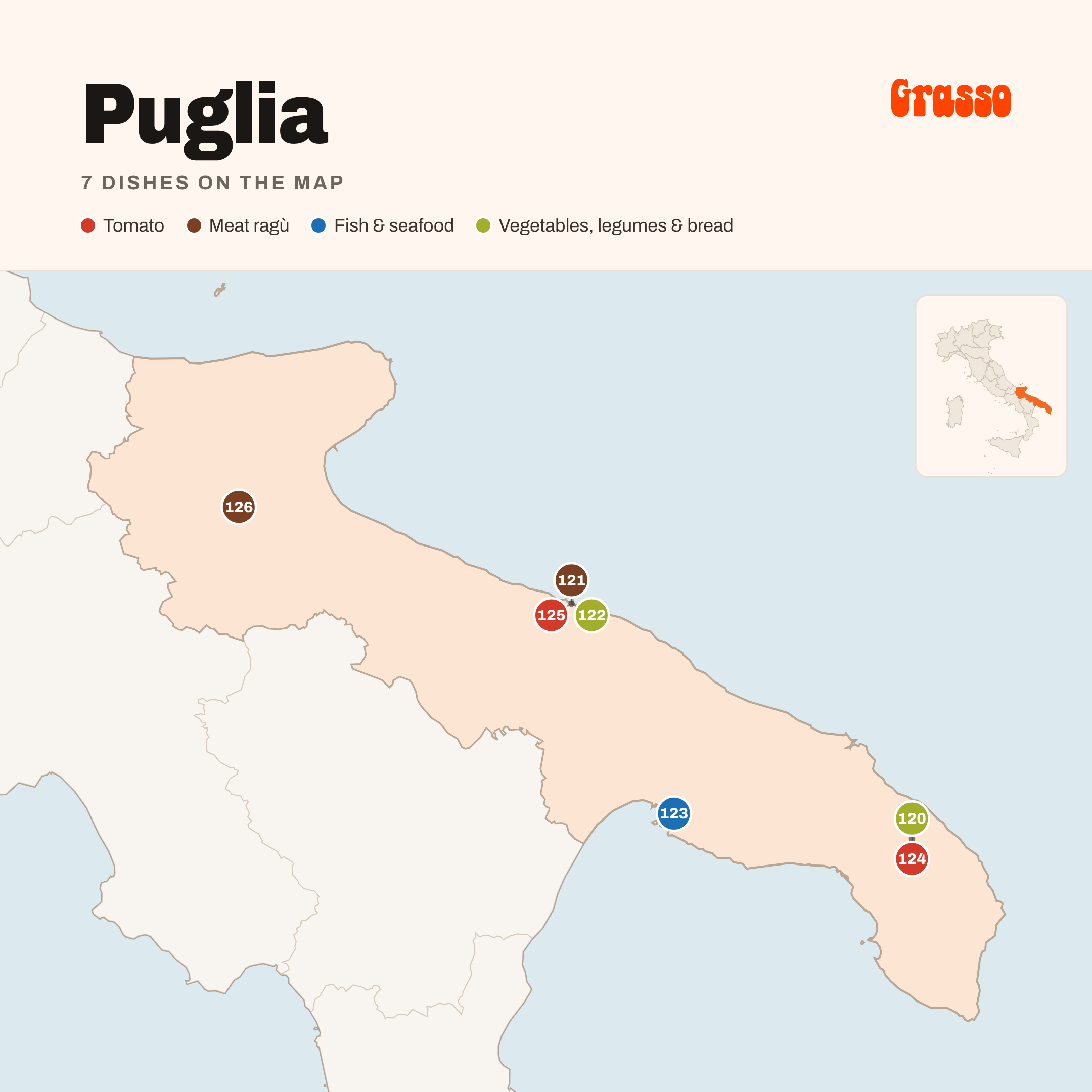
Durum wheat and water make up most pasta in Puglia, with the ear-shaped orecchiette being the signature dish of Bari, and spiralled sagne in Salento.
120. Ciceri e tria (Lecce). Fresh pasta is cooked in water, with some fried, and served with chickpeas.
121. Orecchiette al ragù di braciole (Bari). Rolls of horse meat or veal are slowly cooked in tomato sauce, served with orecchiette.
122. Orecchiette con le cime di rapa (Bari). This orecchiette dish is served with sautéed turnip tops, olive oil and anchovies.
123. Pasta e cozze alla tarantina (Taranto). Rosmarina or tubettini is served with mussels, tomato, black pepper and parsley.
124. Sagne ‘ncannulate al pomodoro (Lecce). Semolina pasta twisted into spirals, and served with a fresh tomato and cacioricotta sauce.
125. Spaghetti all’assassina (Bari). Dating back to 1967, this pasta dish has gone ‘viral’ in recent years. Uncooked spaghetti is browned, with tomato sauce added slowly - risotto style, creating the kind of socarrat you might associate with a paella.
126. Troccoli al ragù (Foggia). A slow-cooked ragù served with a thick spaghetti-like pasta.
Pasta from Basilicata
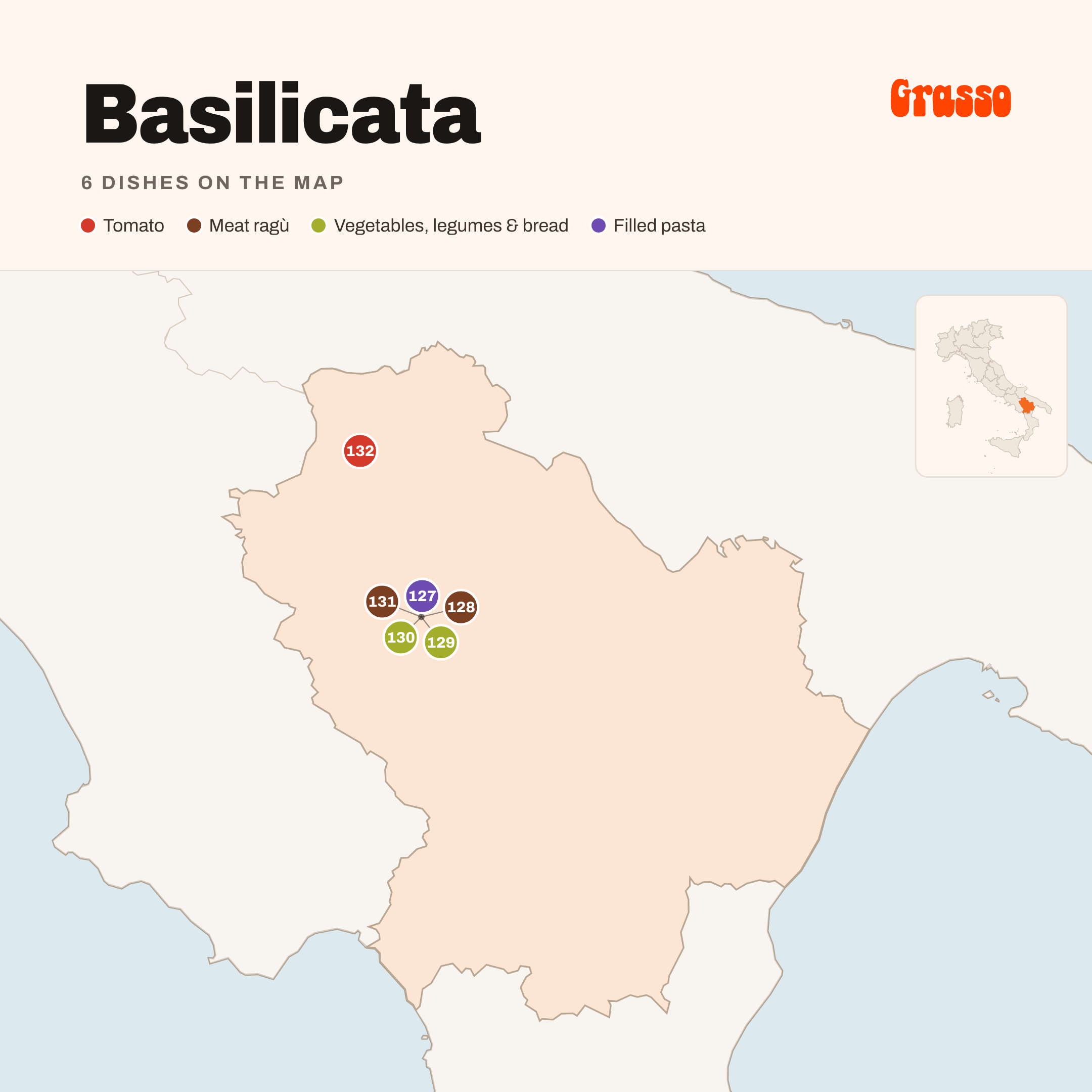
This region is famous for its unique, ear-shaped strascinati pasta and the historic ferricelli.
127. Cauzunciedd (Potenza). Ricotta and egg filled ravioli with a tomato sauce. Sometimes also filled with mint or cinnamon.
128. Ferretti con pezzente e rafano (Potenza). This sauce uses salami pezzente - a sausage using typically lower-grade cuts of the pig. The sauce also uses horseradish and grated cacioricotta or pecorino.
129. Lagane e ceci (Potenza). This uses wide strips of pasta with chickpeas, garlic or leeks and bay leaf.
130. Pasta con i peperoni cruschi (Potenza). Another dish made using ‘poor’ ingredients - typically crisp-fried dried peppers, toasted breadcrumbs and garlic.
131. Strascinati al ragù alla potentina (Potenza). Lamb, veal or pork slowly simmered in tomatoes with garlic, fresh chilli and grated horseradish.
132. Tumacë me tulë (Barile). This dish comes from the descendants of Albanian settlers, and is made with tagliatelle, fried breadcrumbs, tomato and anchovies.
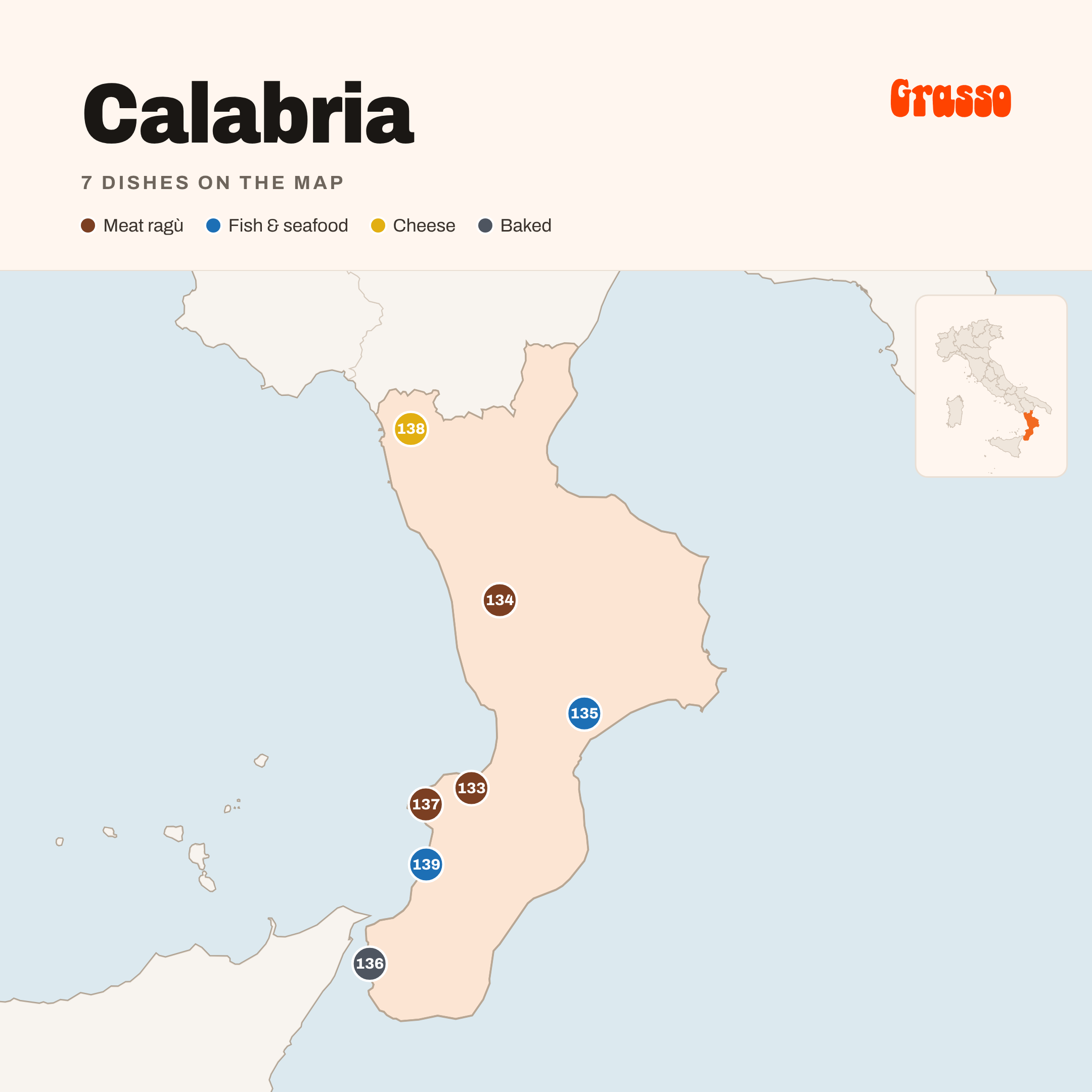
Pasta from Calabria
Calabrian pasta dishes are bold, and often fiery, with a kick from ‘nduja or Tropea red onions, and finished with pecorino.
133. Fileja (Vibo Valentia). Long durum wheat pasta curls, served with ‘nduja, pork, or goat ragù.
134. Maccheroni al ferretto (maccarruni i casa) (Cosenza). Calabrian maccheroni often served with a pork ragù, and served with ricotta salata - a salted, pressed and aged cheese.
135. Pasta ca’ muddica e alici (Catanzaro). Spaghetti with anchovies, toasted stale breadcrumbs and sometimes a touch of pecorino.
136. Pasta chjina (Reggio Calabria). A festive baked pasta for Christmas, Easter and Ferragosto (August 15th), with layers of small meatballs, soppressata, caciocavallo, pecorino and hard-boiled eggs.
137. Pasta con la ‘nduja (Spilinga). ‘Nduja melted into Tropea onions, tomatoes, and pecorino.
138. Rascatieddi con ricotta affumicata (Papasidero). Similar to cavatelli, this pasta is served with smoked ricotta.
139. Struncatura ammollicata (Gioia Tauro). A long, flat pasta served with garlic, chilli, anchovies, olives and breadcrumbs.
Pasta from Sicily
Sicilian pasta dishes are shaped by both its Mediterranean location, and centuries of North African Arabic rule.
140. Anelletti al forno (Palermo). Small pasta rings baked with ragù, béchamel, caciocavallo, hard-boiled eggs and peas, often in a mould lined with fried aubergines and breadcrumbs.
141. Bucatini alla Palina (Palermo). Pine nuts, sugar, cinnamon and cloves, with broccoli and sometimes anchovies.
142. Busiate al pesto trapanese (Trapani). This pesto is made using tomatoes, almonds, garlic, basil and pecorino.
143. Pasta ‘ncasciata (Mistretta). Minced meat with caciocavallo, fried aubergines and a tomato sauce topped with Parmesan.
144. Pasta al nero di seppia (Catania). Cuttlefish cooked in its ink, onion and topped with pecorino.
145. Pasta all’eoliana (Salina, Aeolian Islands). Capers, aubergine, tomato and basil. Sometimes tuna, red onion, olives and anchovies are added.
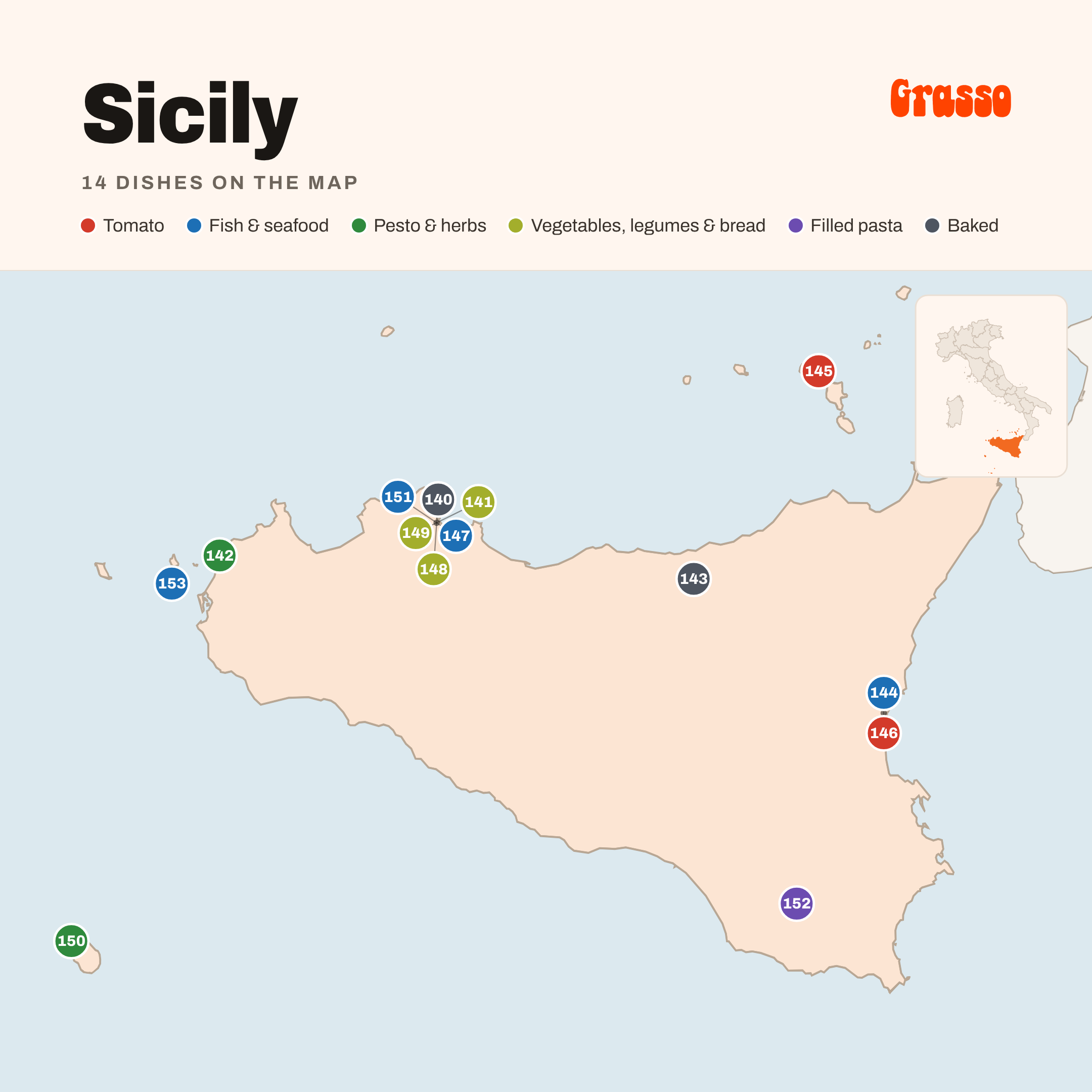
146. Pasta alla Norma (Catania). One of our favourites, this pasta is made with a tomato sauce as the base, fried aubergines, and grated ricotta salata.
147. Pasta c’anciova e muddica (Palermo). Bucatini with salted anchovies, tomato, onion, raisins, pine nuts and toasted breadcrumbs.
148. Pasta con i broccoli arriminati (Palermo). Broccoli cooked with salted sardines, raisins, onions, pine nuts, and saffron, with toasted breadcrumbs.
149. Pasta con i tenerumi (Palermo). The tender shoots of Sicilian zucchini are cooked with a tomato and garlic sauce, and served either as a soup or a soupy pasta.
150. Pasta con il pesto pantesco (Pantelleria). Locally, this is also known as ‘ammogghio’, and is made with ripe tomatoes, garlic, basil, and olive oil. Sometimes, almonds, parsley or capers are added.
151. Pasta con le sarde (Palermo). The favourite pasta dish of our mother, this is made with fresh sardines, fennel, onions, pine nuts, raisins, saffron and toasted breadcrumbs.
152. Ravioli di ricotta al sugo di maiale (Ragusa). Ravioli filled with ricotta, and served with a pork and tomato sauce.
153. Spaghetti con la bottarga di tonno (Favignana, Egadi Islands). Spaghetti topped with grated bottarga.
Pasta from Sardinia
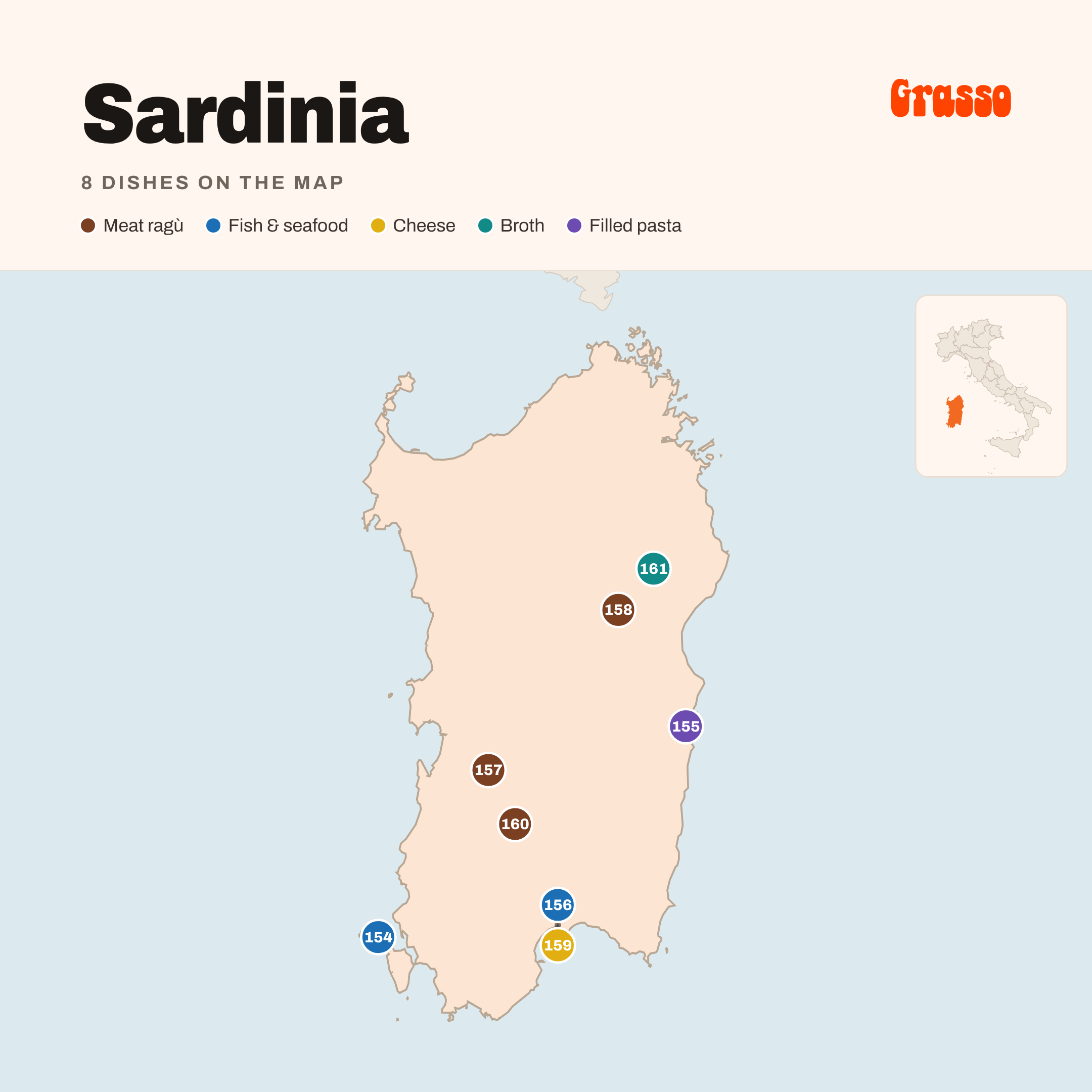
Unique, handmade pasta shapes hold more robust Sardinian sauces.
154. Cassulli alla carlofortina (Carloforte, Isola di San Pietro). Genoese-style pasta cooked with local red tuna and sweet cherry tomatoes.
155. Culurgiones d’Ogliastra (Tortolì). Handmade pasta dumplings stuffed with potato, mint and pecorino, served with a pomodoro sauce. Often eaten on the feast of Sant’Anna on the 26th of July.
156. Fregula cun cocciula (Cagliari). Small semolina balls toasted and cooked with clams, tomato, parsley and chilli.
157. Lorighittas al sugo di pollo (Morgongiori). These twisted and braided pasta rings are served with a tomato and free-range chicken sauce.
158. Macarrones de busa al sugo di pecora (Nuoro). Bucatini-like pasta served with a mutton sauce and pecorino.
159. Malloreddus a casa furriau (Cagliari). Sardinian-style gnocchi with fresh pecorino.
160. Malloreddus alla campidanese (Sanluri). Small semolina shells, coloured with saffron and served with a fresh sausage, tomato and pecorino sauce.
161. Su filindeu (Lula). Semolina dough is pulled into 256 fine threads, crossed into three layers and dried, before being broken into a broth made with sheep meat, with fresh cheese.
Pasta from Italy’s islands
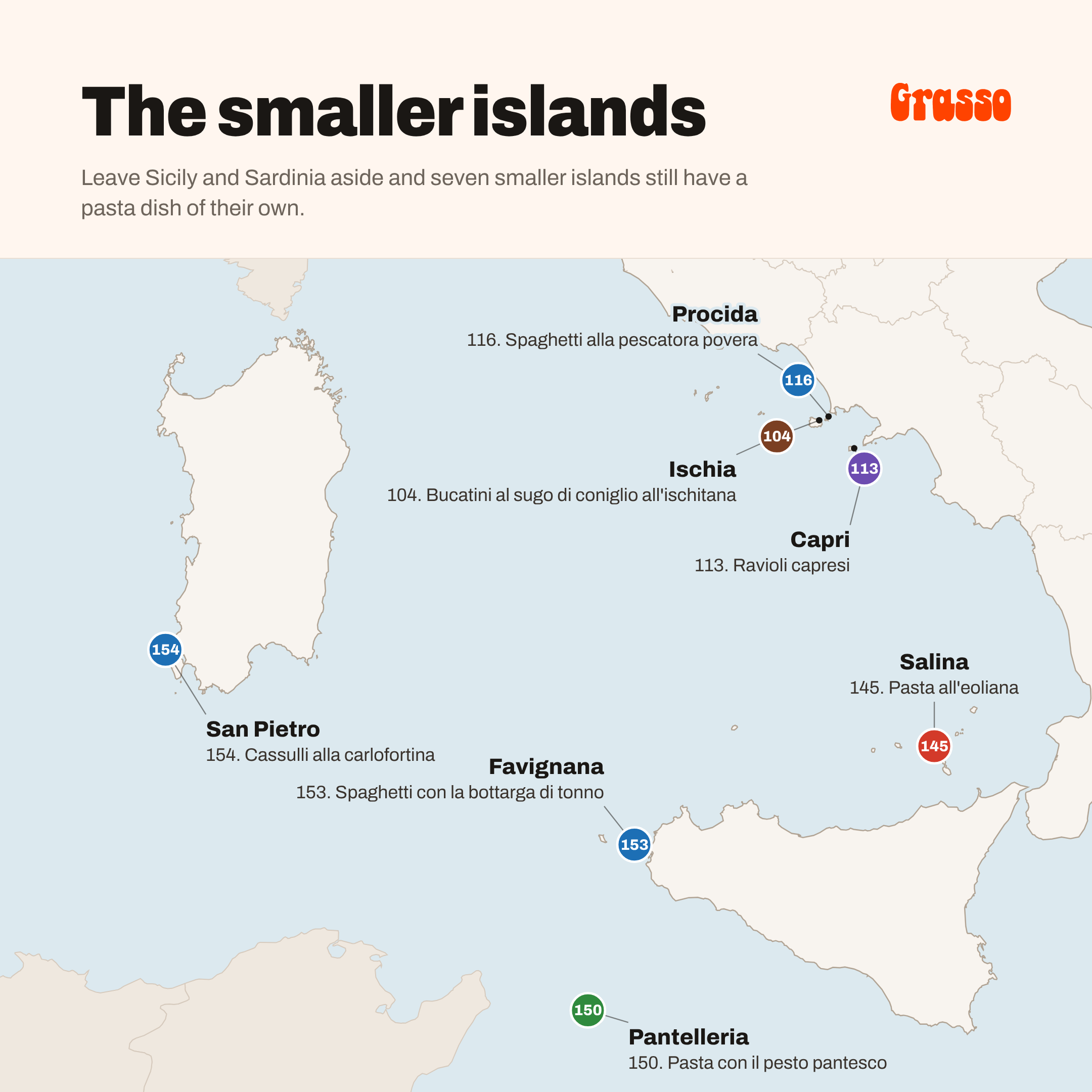
There are seven other, smaller Italian islands with their own pasta dishes (but we couldn’t find one for Elba - get in touch if you know one!)
Capri (Campania). Ravioli filled with caciotta, marjoram and Parmigiano-Reggiano, served with fresh tomato and basil sauce.
Ischia (Campania). Bucatini dressed with the juices of rabbit stewed with white wine and cherry tomatoes (coniglio all’ischitana), with the rabbit served as the main course.
Procida (Campania). Spaghetti alla pescatora povera is made with anchovies, green chillies and cherry tomatoes.
Salina, Aeolian Islands (Sicily). Pasta all’eoliana is made with capers, aubergine and tomatoes.
Favignana, Egadi Islands (Sicily). Spaghetti with grated bottarga.
Pantelleria (Sicily). Pasta with pesto pantesco, made with tomatoes, garlic, basil and sometimes capers and almonds.
San Pietro (Sardinia). Cassulli alla carlofortina is made with red tuna, pesto and tomatoes.
Who made the map
We made this map to celebrate the regional cooking and the pasta of Italy. It was inspired by our own trips to regions such as Sicily, Sardinia, Marche, and Lazio, and realising the differences in not just the pasta shapes but also the ingredients and styles of serving.
We plan to review and update the map each year, making sure the information is both up-to-date and correct. And if you spot anything missing, or that’s incorrect, please get in touch.


